
Alisa Grebenshchikova: ‘If you need a home, poetry will create it’
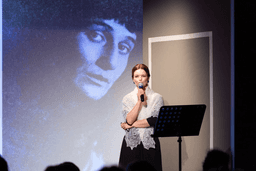
On 4 October, Alisa Grebenshchikova — an actress, director and creator of poetry programmes — will be performing in Luxembourg. She is being brought over by LuxEureka a.s.b.l. We spoke to Alisa about why poems written a century ago sound as if they were written yesterday, what poetry offers to those living far from home, and how to read poetry with children so that they retain their command of the Russian language.
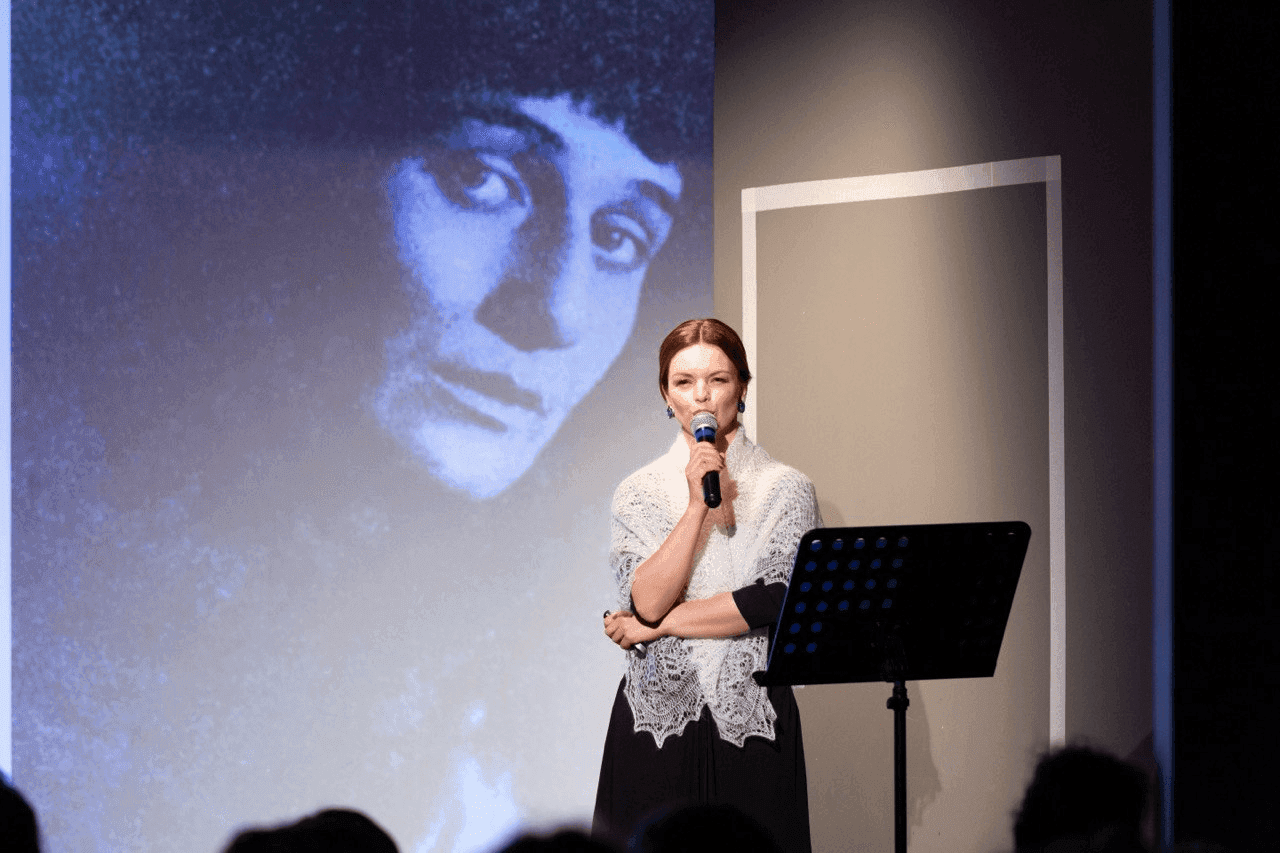
Alisa Grebenshchikova is the winner of the ‘Pomegranate Bracelet’ award at the ‘Literature and Cinema’ film festival for the poetic nature of the female characters she creates in her work. For several years, she was the director of special projects at the Marina Tsvetaeva House-Museum in Moscow, where she ran the ‘Dom’ workshop on working with the written word. And, of course, we know Alisa as a remarkable theatre and film actress.
We know you as an actress and director. But how did poetry come to feature in your life and work?
Poetry has always been a part of me: I graduated from a grammar school specialising in literature, and at the theatre institute in St Petersburg I specialised in musical and spoken-word performance, where particular emphasis was placed on working with words and text. In the first few years after graduating, I just went with the flow, appeared in all sorts of films, performed in a wide variety of plays and barely had time to do anything of my own. But after my son was born, I realised that I really missed good literature; I wanted to be immersed in genuine texts rather than fleeting ones, and since 2009, poetry has been a huge part of my creative life.
Why will you be reading Akhmatova in Luxembourg?
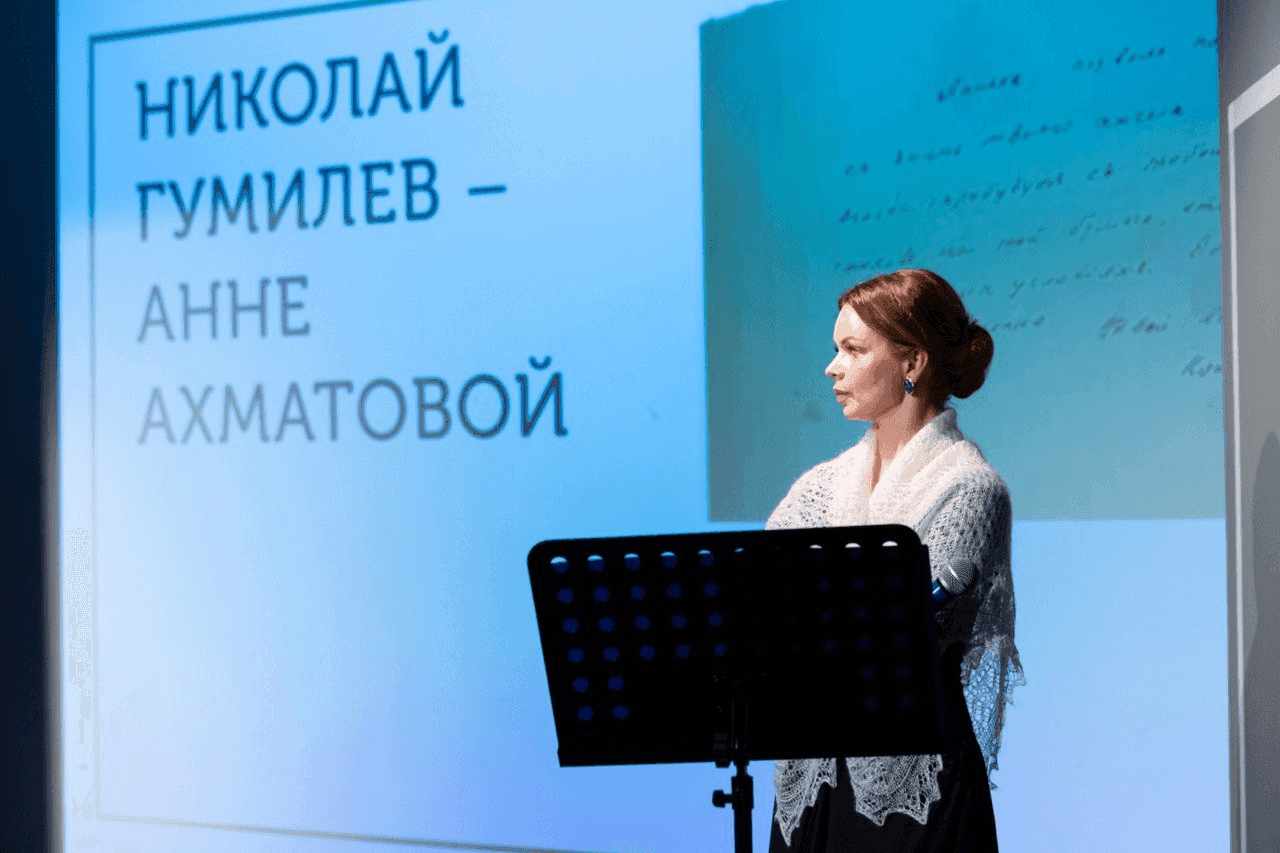
The programme ‘The Tale of the Black Ring’ tells the story behind the creation of Anna Andreevna’s work of the same name. This is one of my most heart-warming and relatable programmes: it is full of tenderness, humour and light, and at the same time it is very, very much about love. Love, thanks to which – and in spite of which – poems come into being.
The programme was based on a story that, as a woman, moved me deeply: Anna Andreevna spent 48 years trying to meet the recipient of her writings. 48 years – just think about it!
What does poetry offer someone who lives far from home but doesn’t want to lose touch with it?
Of course, everyone has their own experience here — primarily their experience of engaging with poetry during their formative years — and so there is no single answer that would suit everyone.
Let me put it this way: the wonderful thing about poetry is that it always transports us to the Looking-Glass World, where familiar everyday objects look just a little different. Poetry offers a chance to take a brief break from the troubles of this world and give the soul some time alone with what it needs most right now. And if what it needs is a home, then poetry will create it — that very feeling of home and tranquillity.
Can poetry help a child retain their command of Russian in a different language environment? How should one read poetry with children so as not to dampen their interest?
Good literature not only cultivates a feel for the language and good taste, but also gives one the pleasure of being able to express one’s thoughts precisely. Poetry is ideal in this sense: a poet is able to convey a wide range of emotions in a single sentence. That is why, of course, poetry is a wonderful way to stay connected to the Russian language.
A reader’s interest, particularly in childhood, is primarily linked to the essence of the text and the underlying idea. Therefore, when reading poetry with children, do not try to focus on the metre or the melody of the verse. First, you need to grasp the idea, and only when it becomes clear what the poem is about should you begin to unravel the beauty of its sound.
Poetry demands a great deal of attention and time from the reader. Has it not become too complex a language for everyday life these days?
No, no and no. What’s more, for several years running I carried out a poetic experiment: I would read, as part of the same programme, poems written a hundred years apart—at the start of the 20th and 21st centuries—and then ask the audience to guess the age of the poems. And everyone always got it wrong: they said that the poems by Tsvetaeva and Mayakovsky had definitely been written just the day before yesterday, whilst they said that Vera Pavlova’s poem had undoubtedly been written a hundred years ago.
In other words, when heard aloud and delivered skilfully, the poetic text does not come across as cumbersome or excessive.
When you recite poetry on stage, do you tend to lose yourself in the text, or do you feel as though you’re in a dialogue with the audience?
My aim is for the audience, upon leaving the theatre, to want to return to the works they have just heard. To open a book, whether in print or digital form. I take to the stage to share all the most beautiful things I know, and that simply wouldn’t be possible without connecting with the audience. But it is the text itself that draws me to people – not emotion, but words and melody.
You have created several highly successful programmes featuring the poetry of Soviet poets. In the popular imagination, Soviet poetry is seen as something loud, public, almost poster-like. For you, however, it is a personal, quiet, almost intimate conversation. How did you come to this approach?
It is easier to speak of what is loud, and what is loud is easier to hear, which is why, amidst the clamour of the times, we often miss what our souls truly need. I take to the stage with a balm and, at the same time, carry a jug full of thoughts that will stay with the audience.
There is a widespread belief that poetry came to an end in the Silver Age and that only Brodsky’s verse is worthy of attention. In my programmes, however, I demonstrate that this is not the case.
Where should an adult who hasn’t read poetry for a long time start?
From a good guide. For example, from me — someone who has spent my whole life introducing poetry to those who would otherwise never have discovered it. And after meeting me, they realise that poetry can be a source of strength in difficult times.
The interview was conducted by Masha Volikova. This article was produced in collaboration with LuxEureka a.s.b.l.