
Do. Be. Continue It: How Collective Imagination Turns a Comic into a Living Work of Art
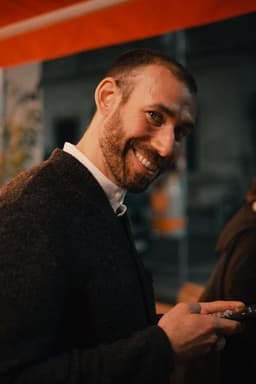
An interview with the creator of DBC on collective storytelling, public art, and a comic shaped by passers-by. CeCiL’s Box, Luxembourg, interactive installation, contemporary art, and collective consciousness.
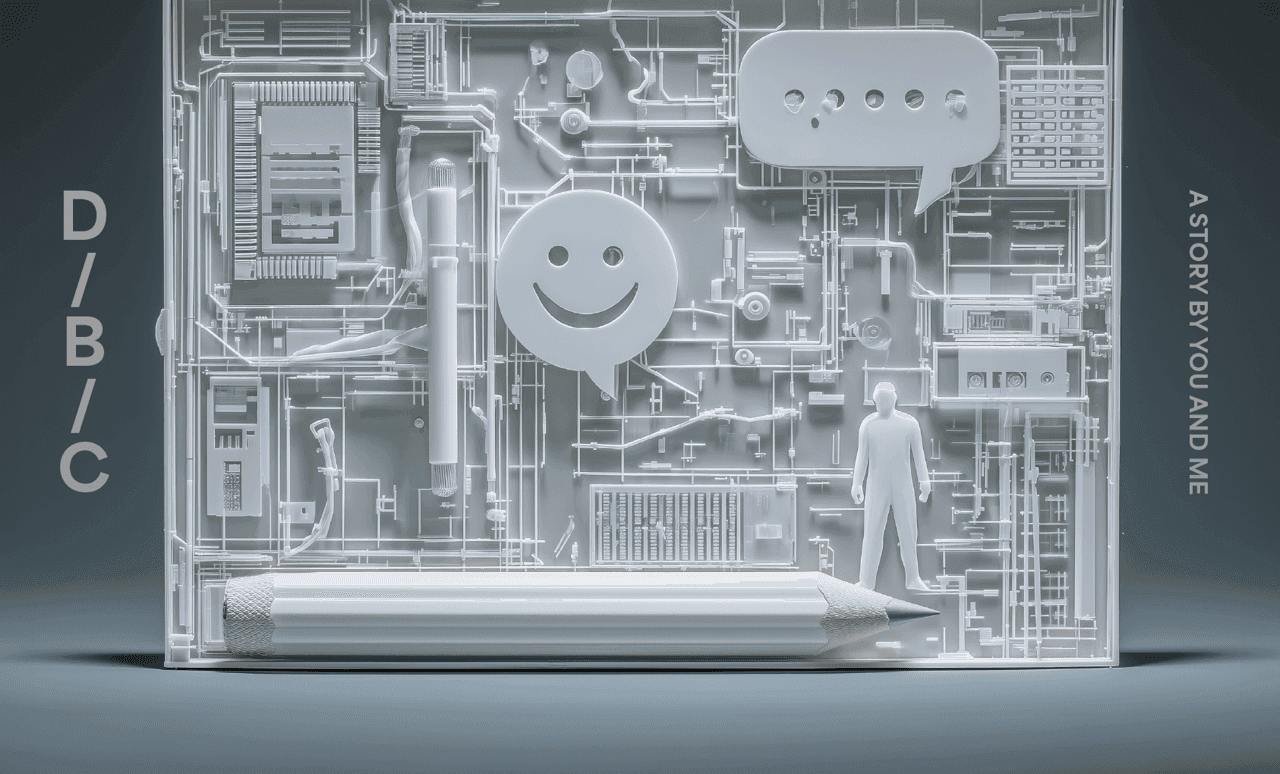
DBC artwork
“DBC – Do, Be, Continue it” proposes a collective, evolving narrative. What made you want to invite passers-by to shape the story rather than keep it directed solely by the author?
I’ve always wanted to create a comic. And even more so, a comic that breaks away from the basic, one-sided narrative where “the good guys” usually win and “the bad guys” lose.
Since I see “telling a story” as a deeply subjective act — especially from a historical perspective, when spoken narrative serves as a vehicle for passing experiences and facts on to the next or future generations — and since every narrator inevitably adds something of themselves, I’ve long had the idea of going a step further and handing over the reins to a multitude of narrators with different lives, desires, and personalities.
For me, it’s both a sociological experiment and a work of art rooted in collective consciousness.
The project encourages everyone to “imagine” and even “co-write” what comes next. How do you approach the idea of giving up part of your creative control to anonymous contributors?
With great joy. I can’t wait to see what people imagine and feel.
You describe the work as a playful, poetically enigmatic reinterpretation of “to be continued.” What emotions or reflections do you hope to spark in the audience as they interact with the installation?
Since participating as a narrator or contributor is, above all, a choice, I’d like it to be a healthy mix of curiosity, lightness, and discovery — of one’s own ideas, desires, and creative sparks.
More than that, like any creative process, this act of imagination is for many of us also a moment of self-discovery — both rational and irrational, a discovery of one’s own psyche.
It’s an internal dialogue with the aim of external conversation, and I’m sure it will be surprising.
The project, updated regularly, becomes a reflection of a collective consciousness. Have any contributions surprised you or steered the narrative in an unexpected direction?
And there you go — you’ve picked up on the key word of this project. At this stage, before the official launch of the comic, there are no contributions yet. Once the first page — imagined solely by me — is displayed, people will be able to imagine what comes next from that status quo, and the narrative will no longer belong entirely to me but will become a collective consciousness.
To be completely honest, I consider myself hard to surprise. But that’s exactly what I’m hoping for.
The CeCiL’s Box is an exhibition space visible 24/7 in the city center. How does exhibiting in public space — rather than in a traditional venue — influence your artistic choices for this project?
Mainly in terms of size and format. Our world is moving faster and faster, and people stop less often during the day, so it was important to choose a format that allows the work to be appreciated at different speeds — in passing, standing in front of it, on a phone, or at home.
That’s where the idea of a QR code came from, leading to a website that serves as the medium for reading and co-narrating the comic.
Your background combines pharmacy, architecture, illustration, graphic design, and painting. How do these varied disciplines feed into your current practice, particularly in a hybrid project like DBC?
Excellent question. I’ll try to keep it short, although I could talk about this for days.
For me, all these disciplines are connected by the simple fact that they depend on one another. Pharmacy relies on meticulous methodology to understand and influence the architecture of biology.
Architecture is meant to host that biology and help it flourish at best — to guide it, or simply to give it shelter. Graphic design, illustration, and painting — visual arts in general — give pharmacy and architecture the means to be seen, appreciated, and understood by far more people (biological subjects) than those directly involved through their profession.
For all this orchestration, there has to be a guiding thread.
In my view, these are two fundamental things intrinsic to everything that exists: rhythm and proportions. Through these necessary and structural links alone, it’s impossible for me to separate these disciplines. As for how they influence my work, I’d mention a few key words: rigor, experiment (framed, under defined conditions), play, structure, module, surprise… and so on.
It’s up to you to decide which word belongs to which field.
After nearly twenty years abroad, you returned to Luxembourg in 2024. Has this return influenced your artistic approach or reawakened certain themes in your work?
You’re asking really good questions.
I think returning to Luxembourg mainly led me to work more as a graphic designer and a bit less as an illustrator. On the other hand, this change — and the visual climate in Luxembourg — strongly motivates me to want to influence what is seen and created here. There is so much to be done.
The recurring themes have largely remained the same, but their perspective has shifted. A bit like me. Like us.
Your work often explores intimacy, everyday life, and subtle human dynamics. How do these themes manifest themselves in the DBC installation, explicitly or implicitly?
That’s something we’ll discover together.
If I had to extrapolate, I’d say that the act of participation itself — through communication between the installation, the participants, and me — will already bring certain themes to the surface. Just through the way people communicate, everyday subtleties will influence the project implicitly and subtly. After all, sharing one’s thoughts and ideas is already quite an intimate act for the narrator, even when done anonymously.
I think the “tone and colors,” as much as the content of people’s ideas and proposals, will have a huge impact on how everyday themes emerge in the comic. I’m very sensitive to people’s emotions.
Your creative process often starts with drawing before evolving into digital work. How does this process adapt to a “living” work, continually transformed by public input?
- Two-minute ballpoint pen sketches to get a feel for the space the ideas will occupy.
- Pencil pages for structure and rhythm.
- Digital work (unless I feel like staying organic, in which case it’s ink and scanner).
Finally, what would you say to someone discovering the CeCiL’s Box for the first time? How would you invite them to interact with DBC?
Just like the slogan says: Do. Be. Continue it.
First, look. Observe. Observe what it stirs in you. But not for too long. Let go and scribble your ideas, your emotions. Tell yourself your fears, your wishes, your absurdities, your laughter. Whatever you want.
I’ll listen. And together we’ll tell it to others.
Less poetically: if the page made you curious and/or inspired you, scan the QR code, then head to dobecontinueit.com to read what comes next and take part.
I’d be delighted.