
Here Comes the Sun: what if true intelligence was already all around us?
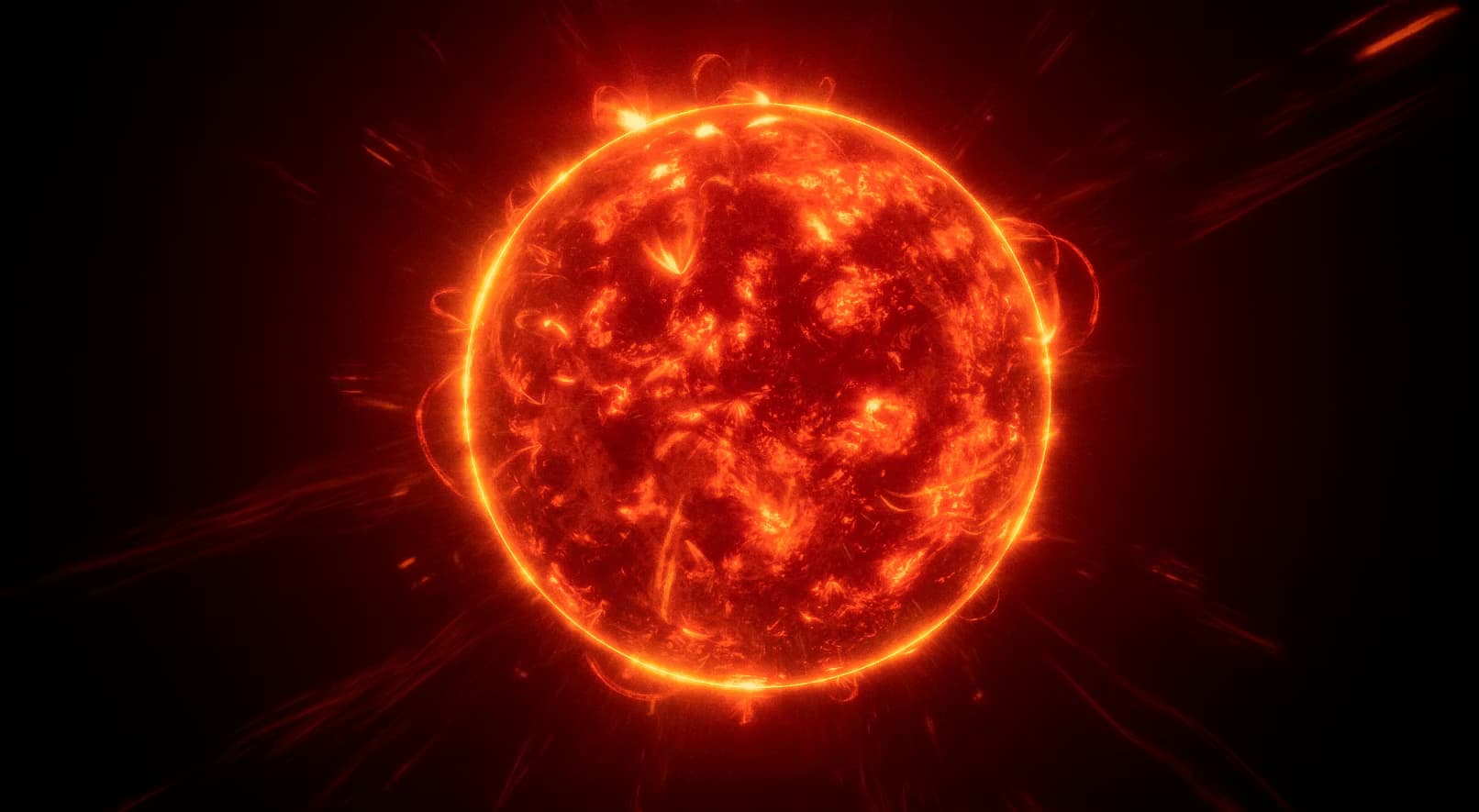
Between art, science and ecology, the exhibition Here Comes the Sun questions our obsession with artificial intelligence and invites us to rediscover the natural intelligence of living things, from solar energy to ecosystems.
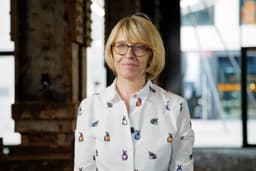
Alice Bucknell
What is the underlying concept behind the Here Comes the Sun exhibition? What is the main message you wish to convey to the public?
The founding idea is simple but radical: we are looking for intelligence in the wrong place. We invest billions in artificial intelligence while ignoring the extraordinary intelligences that have always surrounded us – the sun, which has been spreading its energy with perfect consistency for billions of years; micro-organisms, which have perfected their light architectures; human communities, which choose cooperation. The message we want to convey is that innovation does not require domination, but attention, humility and learning from these living systems that have already solved so many of the problems we are now trying to solve with our technologies.
The title evokes the sun: what does "Here Comes the Sun" symbolise in the context of energy, but also natural intelligence?
The title works on several levels. First, literally: it's February in Luxembourg, the sky is grey, and we all need that light we're missing – the title becomes almost a spell. Secondly, the sun is the oldest and most reliable source of energy we have, an intelligence in itself in its constancy and generosity. But "Here Comes the Sun" is also an invitation to look up, to see things differently, to recognise all those forms of natural intelligence that we have stopped seeing. It is both a poetic and urgent call.
The exhibition seems to defend the idea that innovation does not mean domination. What does this phrase mean to you in concrete terms?
In concrete terms, this means reversing our approach to innovation. Instead of assuming that we need to control and optimise nature to solve our problems, we could start by observing and learning from living systems that have been functioning for millions of years. Radiolarians perfected light capture long before our solar panels. Ecosystems have developed forms of resilience and interdependence that our computer networks are struggling to replicate. Innovation through integration rather than domination means accepting that we are participants in a larger system, rather than engineers seeking to control everything.
How do you define "natural intelligence": is it biodiversity, collective knowledge, living systems, or a broader concept?
It is a deliberately broad concept that encompasses all of these things at once. Natural intelligence is that of the sun, which organises life cycles on Earth; that of radiolarians, which have optimised their geometric shapes over millions of years of evolution; that of ecosystems, which maintain complex balances; but also that of human communities when they choose cooperation and mutual care. What links all these forms of intelligence is that they are not designed to maximise short-term efficiency, but to sustain life in the long term. They accept vulnerability, interdependence, cycles – everything that our technological systems generally try to eliminate.
The works on display explore a future where technology is integrated into ecological and social systems. Where do you think the line between integration and disruption lies?
This is a question that the exhibition poses rather than answers – and that is intentional. The boundary may lie in intention and humility. Solar Protocol, for example, deliberately accepts that it is fragile and dependent on natural cycles – that is integration. The geoengineering explored by Alice Bucknell is based on the premise that we can control the climate – here, we tip over into disruption, even vanity. True integration involves accepting that we do not fully understand the systems we are intervening in, and therefore designing technologies that can fail, adapt and cooperate. As soon as we claim to control everything, we disrupt.
What was the role of curators Françoise Poos and Vincent Crapon (Elektron): how was the selection of works made?
Elektron is a curatorial platform that we founded in 2023 following Esch2022, European Capital of Culture. Our work consists of exploring the intersections between art, digital technologies, science and social issues – always with a critical eye and a desire to stimulate public debate.
Vincent and I work together, and our selection processes are developed through discussion. For this exhibition, Cercle Cité and LuxFilmFest asked us for a proposal that combines immersive technology, cinema codes and a vision of the future for the city of tomorrow. We immediately thought of Staring at the Sun, Alice Bucknell's science fiction documentary that we discovered when she left her residency at EPFL in Lausanne – this way of using speculative fiction to question our relationship with energy and climate. From there, we constructed a journey that goes from the microscopic (Bridle's radiolarians) to the network (Solar Protocol) to the planetary (Bucknell), weaving the question of natural intelligence as a common thread.
In a few words, could you describe the approaches of the artists featured in the exhibition (James Bridle, Alice Bucknell, Solar Protocol) and how their visions complement each other?
James Bridle takes us back to the microscopic and the long time scale of evolution: his solar panels engraved with radiolarians show us that the intelligence of form and light has existed for millions of years. Solar Protocol (Tega Brain, Alex Nathanson, Benedetta Piantella) proposes a collective and distributed intelligence: their solar internet operates through a network of volunteers and follows the cycles of the sun—it is a technology that embraces its fragility and interdependence.
Alice Bucknell transports us to a future where we attempt to geo-engineer the climate, revealing the ambiguity and dangers of trying to control planetary systems that we poorly understand. The three visions echo each other by exploring different scales of intelligence—from micro-organisms to the planetary—and all question our obsession with control versus learning from living things.
For the Solar Protocol collective, how does the work question the relationship between digital infrastructure and energy resources?
Solar Protocol makes visible what is usually invisible: the dependence of our digital infrastructure on energy. Their network of solar servers literally follows the sun – when it is night-time in New York, the server passes the baton to the one in Sydney, where the sun is shining. It's beautiful, but it's also deliberately restrictive. The system only works when the sun is shining, it depends on volunteers to maintain the servers, and it is slow at times. In doing so, Solar Protocol raises an essential question: what if our digital technologies had to adapt to natural rhythms rather than the other way around? What if we accepted that the internet is sometimes slow, sometimes unavailable, instead of consuming more and more energy to maintain this illusion of total availability?
The issue of energy is often addressed from a political or industrial perspective: how can art offer a different interpretation—one that is more emotional, more critical, more accessible?
Art has this extraordinary power to make us feel before it makes us understand. When we see Bridle's solar panels engraved with radiolarians, we are first struck by their beauty – and only afterwards do we realise what they say about evolution and intelligence. When we watch Alice Bucknell's video, we are immersed in geo-engineered landscapes before fully grasping the ethical and political implications. Art bypasses our intellectual defences and preconceived positions. It activates the imagination, allowing us to inhabit possible futures and experience contradictions without having to resolve them immediately. In a political debate on energy, we defend our position. When faced with a work of art, we open ourselves up to complexity.
What audiences are you hoping to reach: art lovers, those curious about science, concerned citizens? And what experience do you want them to have when visiting the exhibition?
We hope to reach all of these audiences at once – and especially those who don't identify with any of these categories! Digital art sometimes has a reputation for being obscure or overly technical, but we have designed this exhibition to be accessible to everyone. Someone may come for Alice Bucknell's beautiful images and leave with questions about geoengineering. Another may be fascinated by the technical aspect of Solar Protocol and ultimately marvel at the beauty of radiolarians. The experience we want to create is one of wonder first – at the complexity and intelligence of living things – and then critical reflection. We want people to leave with a desire to learn more, to see better, to understand the world around them better.
In your opinion, what are the biggest blind spots in our discussions about technology (AI, digital, innovation) today, and how does this exhibition attempt to address them?
The biggest blind spot is our inability to recognise that intelligence is not a human invention. We talk about artificial intelligence as if we were inventing intelligence for the first time, when we are surrounded by extraordinary forms of intelligence – evolutionary, ecological, collective – that have been functioning for millions of years. The other blind spot is our obsession with efficiency and control: we design technologies that attempt to eliminate all fragility, all dependence, all uncertainty. But the most resilient systems – ecosystems, living communities – are precisely those that accept vulnerability and interdependence. This exhibition attempts to shift our perspective: what if we stopped trying to create ever more powerful artificial intelligences and instead learned from the natural intelligences that surround us?
If you had to leave visitors with just one question to take away with them after their visit, what would it be?
In fact, we would like them to leave with several questions that answer each other: How can I learn to better see the intelligences around me? How can I contribute to building technologies that cooperate rather than dominate? But if we had to choose just one, it might be this: What am I missing when I don't look? Because that's what it's all about – relearning how to see, to marvel, to recognise that we live in a reality shared with extraordinary intelligences. And that our future may depend less on our ability to innovate than on our ability to listen and learn.