
How "The Appeal" Uses a 1936 Trial to Challenge Modern Polarisation

What happens when you put Shakespeare on trial to navigate a modern crisis? Inspired by a fascinating 1936 event where refugee artists staged a mock tribunal over The Merchant of Venice, director Orly Noa Rabinyan’s interactive play The Appeal transforms the audience into an active courtroom jury whose votes dictate the ending. In an era dominated by echo chambers and rigid taking of sides, this unique production champions "radical listening" and internal conflict, inviting us to step into a safe space for difficult conversations and trade our comfortable certainties for much-needed question marks.
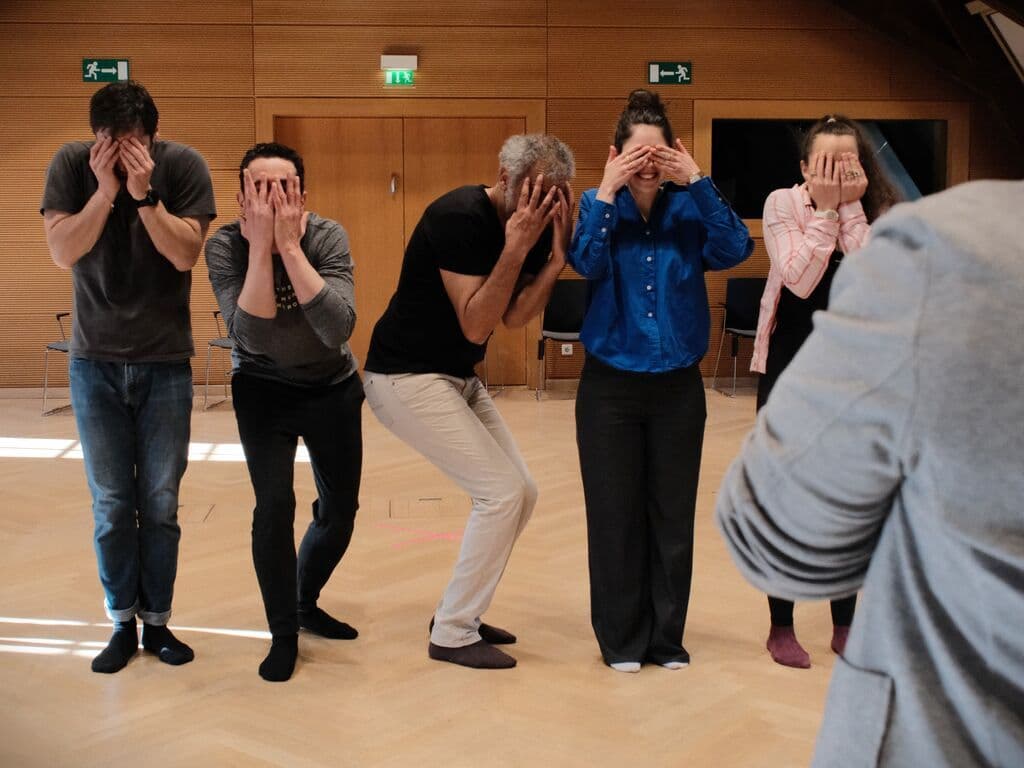
© neimënster | Rui Henriques
Could you briefly introduce yourself and tell us about your artistic background?
My name is Orly Noa Rabinyan. I am a theatre director, writer and voice artist. I was born in Israel to Persian parents, and later in life became a migrant myself. Living between places and between languages is something I know from the inside. I am interested in the corridors between cultures: what happens there, what gets lost, what surprisingly survives. I call my practice Post Home Theatre.
How did the idea for The Appeal come about?
It started during the pandemic, from a desire that theatres, once they reopened, return to making political work that engages with reality. During lockdown, I went back to reading about a literary trial that had taken hold of Tel Aviv in 1936, in response to a public protest against the first Hebrew production of Shakespeare's The Merchant of Venice. I was fascinated by this event and its connection to the present day.
What parallels did you find between this historical moment and the present?
The protest from 1936 stood in painful contrast to what I was witnessing around me: theatre artists demonstrating in the streets, met with complete indifference, while the human encounter itself was declared dangerous. And yet that same city 90 years before had the exact opposite impulse: a community so passionate about the connection between stage and reality that its members came together in one space to debate the questions that kept them up at night. The Appeal is an attempt to reconnect with that spirit.
The project is inspired by a fictional trial linked to a historical event - could you tell us more about this context?
Back then, Habima Theatre in Tel Aviv - which produced The Merchant of Venice - was an ensemble of migrants operating under the British Mandate. They regularly invited international directors to collaborate with them. One of these directors was the German political director Leopold Jessner, the previous intendant of the Berliner Staatstheater, who had fled the Nazis and become a refugee. Jessner specifically wanted to direct The Shylock Play, as they used to call it back then in Tel Aviv, based on his own lived experience. However, this was just months after the Nuremberg Laws had been enacted and a protest erupted from the moment the production was announced.
Habima's response was extraordinary: they invited the protesters, the artistic team, and real jurists to hold an imaginary trial. They put themselves on trial, allowing this question to be debated: is this what the Hebrew theatre should be staging? But they also accused Shakespeare for writing a character like Shylock - yes, they put Shakespeare on trial while living under British rule! This was a form of non-violent resistance. And lastly, they accused Jessner, the director, for his interpretation.
How does this trial appear in your own play?
My play includes quotes from papers documenting the protest and the original texts from the trial protocol, including Jessner's defence speech. To his disadvantage, Jessner stood up to defend all three accused, and he did so in German, being the only non-Hebrew speaker in the room. A refugee director, cast in that situation as the Other, the Shylock, but this time among his own people. The layers of that image never left me. His speech became the door through which I entered the work, and I placed it at the heart of my piece.
Why did you choose the format of a public debate as a theatrical form?
A debate has rules, and the most important one is to listen to the other side. Unfortunately, this is an ability we seem to have lost in today's world, where debates have become about destroying the other. I am hoping to achieve the opposite: radical listening. Sounds simple, but it isn’t.
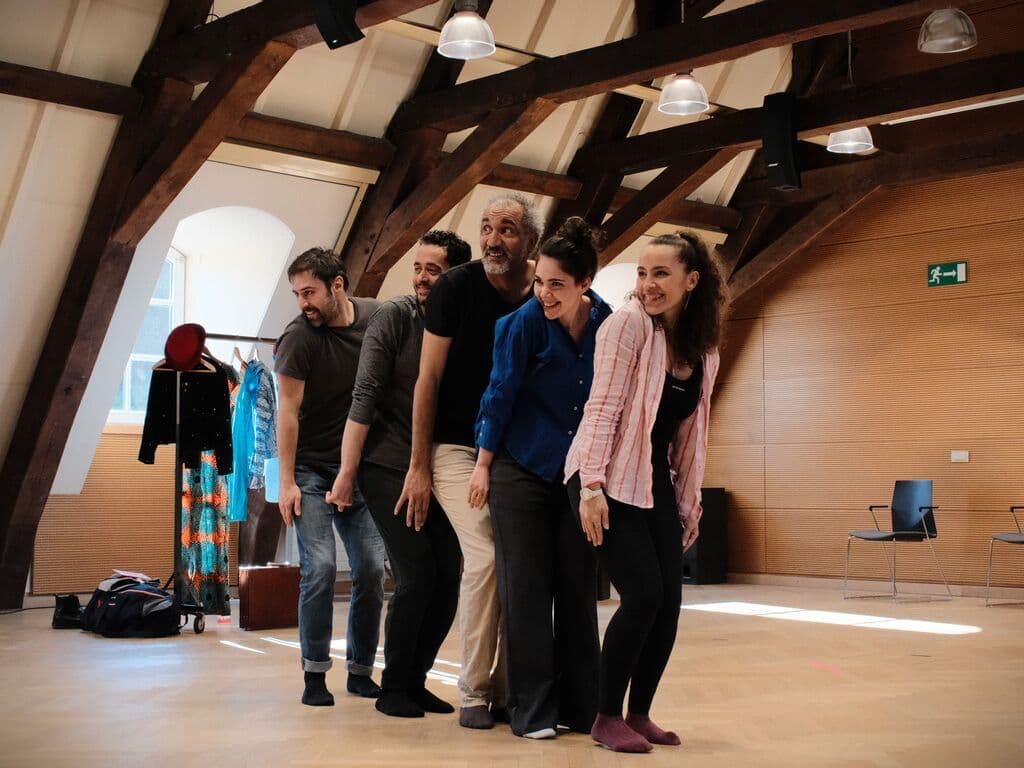
One of the tools I often use is what I call "splitting my voice": distributing my internal conflict across multiple performers on stage. What I put on stage is a public reflection of my own intimate conversation. All these voices coexist inside me: Israel and Iran, Europe and the Middle East, a feeling of home and of exile at once. Rather than resolving these contradictions I have learned to embrace them. That became the driving force behind my work.
What role does the audience play?
A central one. They are not just witnesses - they are participants and decision makers in our imaginary courtroom. And they surprise us, every time. The true shift from show to show is determined by their vote. We are often struck by how different audiences make entirely different choices and create a different event.
How do you adapt the performance to different contexts or casts?
The debates always stem from the original questions raised in 1936, but they take different turns based on the specific identities in the room. I rewrite parts of the play for each new cast and place. In the process, I interview the actors and conduct group conversations to allow the disagreements to emerge. Theatre is one of the last spaces we have where conflict and difficult conversation can still take place.
Have you observed any particularly striking reactions so far?
Many viewers report that they were convinced of one thing, but that listening to the other side opened their minds to a new way of thinking. One audience member here in Luxembourg told me that voting between the two sides was a very difficult task. For me, that difficulty is exactly the point. To challenge the dead-end logic of taking sides. Can we hold two truths? I am not interested in people leaving with “the right answer”. I am interested in them leaving a little less certain of it. In this age of exclamation points, I am aspiring for some necessary question marks.
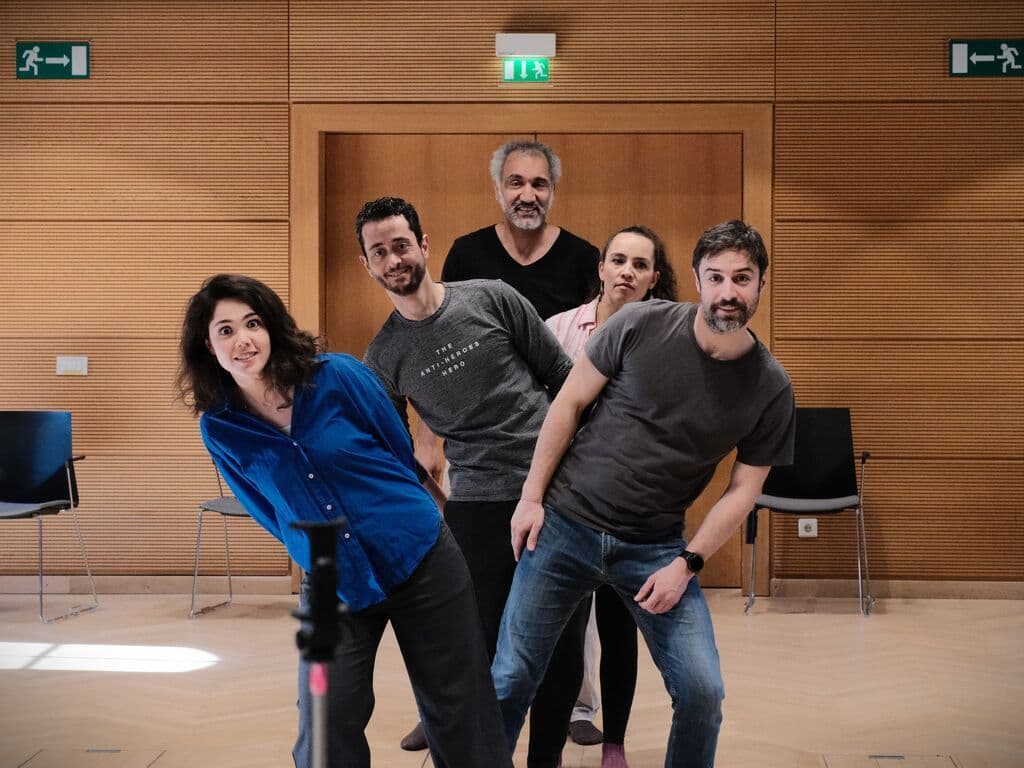
What does presenting this work at neimënster represent for you?
From the beginning, I envisioned The Appeal as an international tool for conversation, something I want to travel with after the initial production in Tel Aviv, to bring it to more communities. Luxembourg seemed like the perfect place to begin this journey because of the many cultures it naturally connects, and neimënster was the rare place that made it all possible. One of the many gifts neimënster has given me was that my residency coincided with the stay of Iranian artists. Sitting together, between English and Farsi, the mother tongue of my parents and grandparents, sharing histories and present moments, is something I deeply cherish. Neimënster is a true home for exchange. The voices of all the artists I met there, especially the local Luxembourgish artists with whom neimënster enabled me to collaborate, shaped the next phase of The Appeal.
What are the next steps for The Appeal after this restitution phase?
I always knew that adapting The Appeal to a European context would take time: it is a piece so deeply rooted in a specific local history that transplanting it into new soil required patience. The series of laboratory-style residencies at neimënster allowed me to each time focus on a different part. The Appeal is still a work in progress, but I do hope that the next stage will be producing it in full.
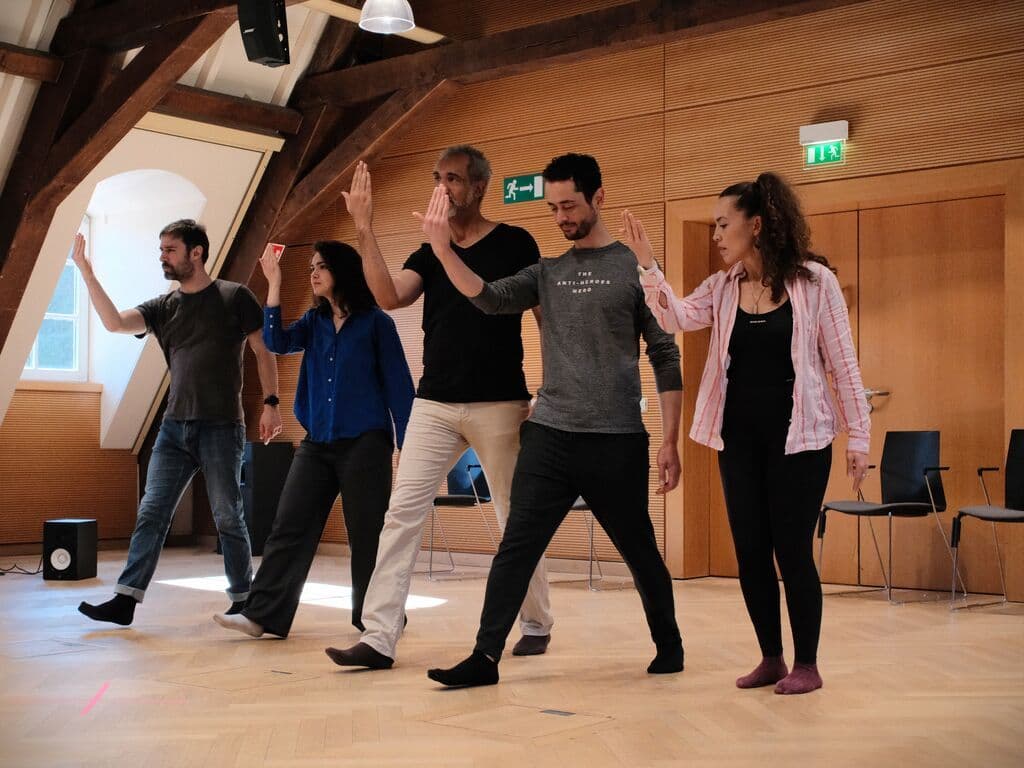
Do you believe theatre can genuinely become a space for dialogue in times of tension?
I do. That is exactly what I am appealing for. Real human encounters. At the centre, beneath all the history and the debate structure and the votes, there is one person: Leopold Jessner. A nearly forgotten man, stateless, forced to flee, standing on a stage trying to be accepted, to be seen as human. My present day Jessners and Shylocks on stage reflect him, and anyone who still finds themselves having to defend their humanity and their right to belong. That, in the end, is what the piece is about. Not 1936. Right here, right now.