
Sworn translator in Luxembourg: experience, rules, tips

Interview with a sworn translator about working in Luxembourg: oath, documents, apostille, languages of translation, and common mistakes made by clients.
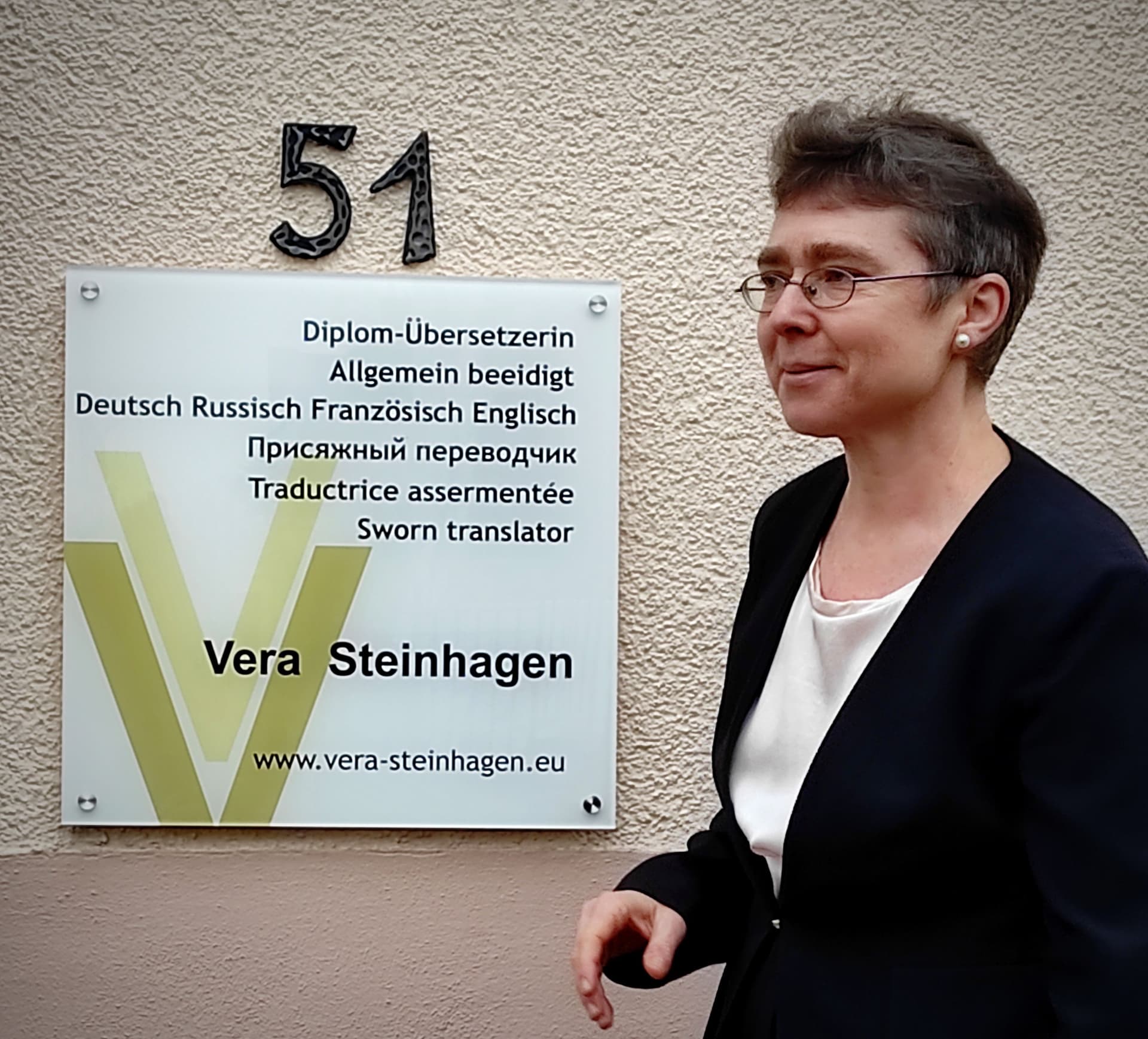
My name is Vera Steinhagen. I worked as a sworn translator in Germany for eight years and, after moving to Luxembourg, decided that I would fight for my profession to the last drop of blood.
About preparing for the move
While still working in Berlin, I prepared in advance for my move to Luxembourg. I looked online to see what documents I would need to take the oath. In my case, these were:
- certified copy of diploma,
- certificate of no criminal record,
- curriculum vitae,
- a free-form statement.
And that's it, basically. I didn't need to confirm my qualifications (perhaps because I got my degree in Germany). Mind you, that was 13 years ago. Nowadays, you need to register your degree with the Ministry of Education's degree registry beforehand, but it's just a formality.
Nevertheless, on Thursday I crossed the border, and the next day, on Friday, I personally brought the documents to the Ministry of Justice. Four months later, I was invited to take the oath.
So here I quickly returned to my duties as a sworn translator.
Who is a sworn translator?
A sworn translator is a specialist who is authorised to certify translations with their signature and seal. They swear an oath to translate the written texts and statements entrusted to them without distortion, regardless of their content.
After taking the oath, you can order a stamp. The stamp impression and a sample of your personal signature are entered into the register of the Ministry of Foreign Affairs. Any official authority in Luxembourg is obliged to accept a translation certified with such a signature and stamp.
The difference between the Luxembourg procedure and the Russian one is that the translator here does not depend on the notary: the signature does not need to be re-certified, the translator certifies the accuracy of their translation themselves.
A sworn translator is not a civil servant. However, the state delegates certain functions to them.
People who have some kind of relationship with the state turn to sworn translators. For example, a person needs to submit documents for marriage, a company needs to send an extract from the commercial register to the bank, parents want to apply for citizenship for their child, etc. And these clients' documents are in a foreign language. They come to a sworn translator, receive a translation certified by signature and seal, and submit it to the appropriate authority.
There are also government orders, mainly issued by courts and the police. When dealing with a person who does not know the local language, the interpreter is obliged to accurately convey the words of the government representative and translate the response with the same accuracy.
However, I still work with documents most of the time.
How to prepare documents correctly
First of all, it is necessary to highlight the category of personal documents. These include:
- birth certificate;
- marriage certificate;
- certificate of divorce;
- certificate of change of surname;
- death certificate (this is a special document: no client has brought one yet).
All personal documents must be apostilled in Russia. Apostilles can only be issued by the state authorities of the country that issued the document. No one else can do this.
When a person in Luxembourg enters into any kind of relationship with the state, they are asked to provide the relevant personal document, sometimes certified with an apostille.
Diplomas do not need to be apostilled. Some people have an apostille on this document, but it is accepted even without apostille. So you don't need to waste extra money and time.
Translations in Russia should be kept to an absolute minimum! Only those documents that are directly necessary for entry into the country.
Why is that? Translators are subject to so-called territorial restrictions. Simply put, a country has the right to reject a "foreign" translation. Sometimes a person gets through at first, but then the translation has to be redone.
Why is that? Translators are subject to so-called territorial restrictions. Simply put, a country has the right to reject a "foreign" translation. Sometimes a person gets through at first, but then the translation has to be redone.
To put it even more simply, you need to translate a document where you intend to use it. Then there will be no problems.
This restriction also applies in reverse. Luxembourg's sworn translators work for the Grand Duchy. If, for example, a translated document needs to be sent to Russia, the translator's signature must be certified by the consulate. Then it will be accepted in Russia.
How many languages should it be translated into?
Luxembourg has three official languages: German, French and Luxembourgish. Traditionally, documents are translated into German or French.
It is enough to choose one, there is no need to translate everything!
Contrary to popular belief, English is not an official language. However, some government agencies accept documents translated into English.
For example, the Foreign Office may accept documents for a visa in English, and the Department for Education may accept a diploma. Furthermore, the Home Office changed its rules just a couple of months ago and now accepts documents and translations in English.
It is important to understand that government agencies may either accept your documents translated into English or refuse them.
Neither the courts nor the police accept documents/translations in English. Even if both the police officer and the person who came to the police station speak English, the report is written in German or French, and an interpreter is always called in for final verification.
What I am getting at: you can translate freely into French or German, but not always into English, depending on the authorities for which the translation is intended.
I already have a translation, can you certify it?
When I hear this question, I feel very sad. In very rare cases, this finished translation comes to me in Word format. Most often it is in PDF format. And it is blurry and low resolution. What am I supposed to do with it?
Let's say I can run it through OCR (a programme for converting images to text or PDF to DOC — editor's note) and hope that it reads it. Then I can try to make corrections there, and they will have to be made anyway.
It is not possible to simply sign and stamp the PDF that was sent.
A sworn translator is required to carefully review the finished translation, compare it with the original, make any necessary corrections, write that the translation is certified, and indicate their surname and address.
Conclusion: if you want to ask a translator to certify someone else's translation, it must at least be in Word format.
I need a translation today!
As a rule, people do not put translators in a tight spot, but set reasonable deadlines. However, sometimes circumstances arise where a translation is truly needed urgently: for example, you managed to book an appointment for the next day. In such cases, I consider it my duty to translate standard documents within one day.
Over the course of 20 years, I have created many templates for a wide variety of standard documents in different languages — from marriage certificates to tax returns and extracts from the commercial register. The longer you work, the faster you get.
I don't charge any extra for this. I think it's the right thing to do. I don't like to keep people waiting.
It should be clarified that we are talking about simple documents. No one would undertake to translate a 20-page contract in a single day. It is almost impossible.
When accepting an order, any professional translator always assesses whether they are capable of completing the requested amount of work within the specified time frame. In some cases, it is more honest and appropriate to decline the order.
What can speed up the work of a translator
Like other colleagues, I often ask clients to send me a scan of a document. This can be done with a scanner or using a mobile phone app. Many people send good, clear scans.
What else do they send? Blurry, low-resolution photos taken with a mobile phone, with the phone's shadow visible. Or a dark photo with fingernails holding the document. They send documents against a carpeted background, photos with feet. But my personal favourite is a crumpled piece of paper lying on the floor =)
This is risky: firstly, it is much more difficult to recognise numbers and small print on a blurry and dark photograph than on a clear scan. Secondly, working with a poor-quality document takes much longer, and therefore it is often easier to refuse such work altogether.
And most importantly, a scan/photo of the original document is always attached to the translation. Why would official authorities want to see a carpet, tablecloth, or a person's nails, or a black piece of paper on which nothing can be discerned?
How to choose the right translator
An unusual and rather complex question.
Understand that translators are sworn in for specific languages.
A sworn translator cannot certify translations from any language into any other language. Each of us has a specific set of languages for which we have taken an oath. This means that I have the right to certify translations from Russian, French, German or English into any of these languages. However, I cannot certify translations from Belarusian or Ukrainian, for example, as I have not taken an oath for these languages, even though the content of the document may be understandable.
A list of all sworn translators is published on the Ministry of Justice website. It is clearly divided by language.
If you need a translation from Russian, go to the website and look at the list of sworn Russian translators. If you need a translation from Polish, for example, look at the list of sworn Polish translators. Sometimes a rare language is not represented in Luxembourg. For example, Uzbek. What should you do? Look in larger European Union countries where there are translators for that language.
It would seem that you could have your documents translated on the spot from a less common language into Russian or English, and then in Luxembourg into French or German. However, we risk encountering a situation where the translation of the translation will not be accepted. Such cases have occurred in the past.
Choose based on the size of the order, not the size of the agency.
Another important point. Some people go straight to large agencies for translations, believing that since they are well-known, they will definitely do the job right. Of course, they will, but there is one caveat.
Large translation agencies initiate a comprehensive administrative process, which significantly increases the price. Essentially, it is worth going there if you have a large (really large!) stack of papers that need to be processed in a short time, or a company website that needs to be translated into different languages. If the order requires serious project management.
If you need to translate several documents, contact a freelance translator or a small agency directly. Project management is minimal for such orders.
In addition, you will be dealing with a specific person. They work with your document, which means that you can quickly and easily clarify everything without intermediaries and, very importantly, they can directly ask you any questions they may have.
What a sworn translator is not entitled to do
We do not have the right to certify original documents. A sworn translator only works when there is a translation. That is, if someone comes to me and says, "Certify this power of attorney for me," I will refuse, because that is the job of a notary public and is outside my area of expertise.
It is a different matter if a person comes and says, "I have a power of attorney in Russian, it has already been certified by a notary, and I need a translation to use it in Luxembourg." That is my job; I will translate the Russian text and certify the translation. It is important to remember that a sworn translator is not a notary!
Incidentally, this is precisely why translators are not responsible for the authenticity of the documents they are asked to translate. They are only responsible for the accuracy of the translation.
We cannot certify signatures, certify powers of attorney, and certainly not affix apostilles! We can only certify the accuracy of translations.
You also cannot translate your own documents. This is where the principle of interest comes into play. During the notarisation of contracts, the notary always asks the translator whether the clients are his relatives and records in the minutes that they are not.
Luxembourg in brief. Pros and cons
Luxembourg has many advantages. I will try to highlight the main ones:
- Accessibility of the administration;
- The MyGuichet.lu portal! It's brilliant!
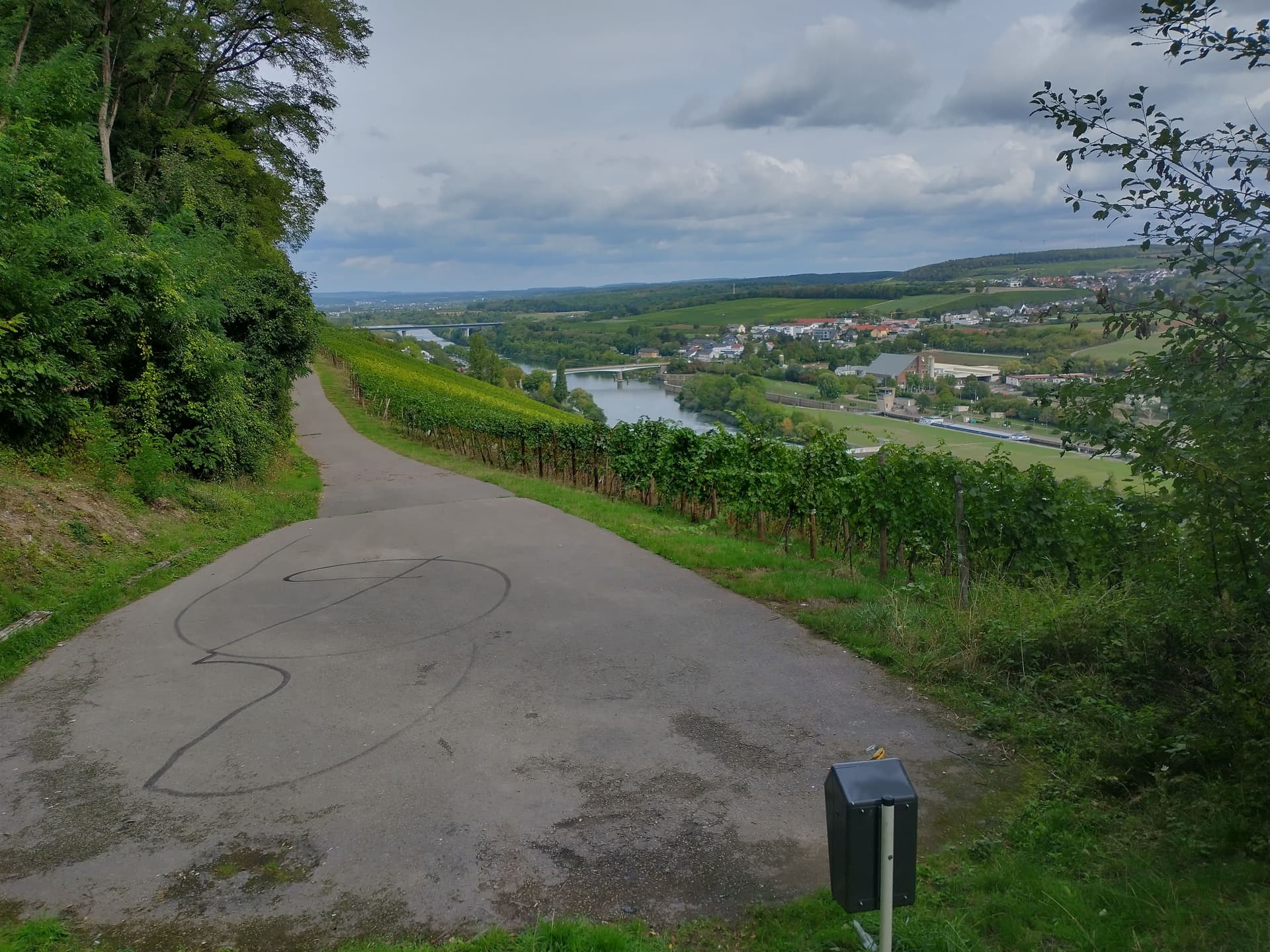
- Numerous hiking and cycling trails in the immediate vicinity of the house;
- Extremely low unemployment;
- Multilingualism: translators, and others, must keep all their languages in working order;
- Free transport and active government policy to promote "soft mobility";
- Nature;
- Apple picking at the plantation in Steinzell every September. =)
Of course, the country also has its downsides:
- The downside of multilingualism: maintaining several languages in working order is very difficult, and not only for translators.
- Expensive housing! Was there anyone who didn't mention this? (No, there wasn't. — Editor's note).
I love Luxembourg. It has many more advantages than disadvantages. What advice would you give to newcomers? Be prepared to invest a lot of energy and time in integrating. It is very difficult, often painful, but worth all the effort.