
Beautiful places to visit in Luxembourg

Your personal guide to Luxembourg: castles and ruins, festivals, hiking trails, lakes and rivers — ideas for travelling and walking around the country.
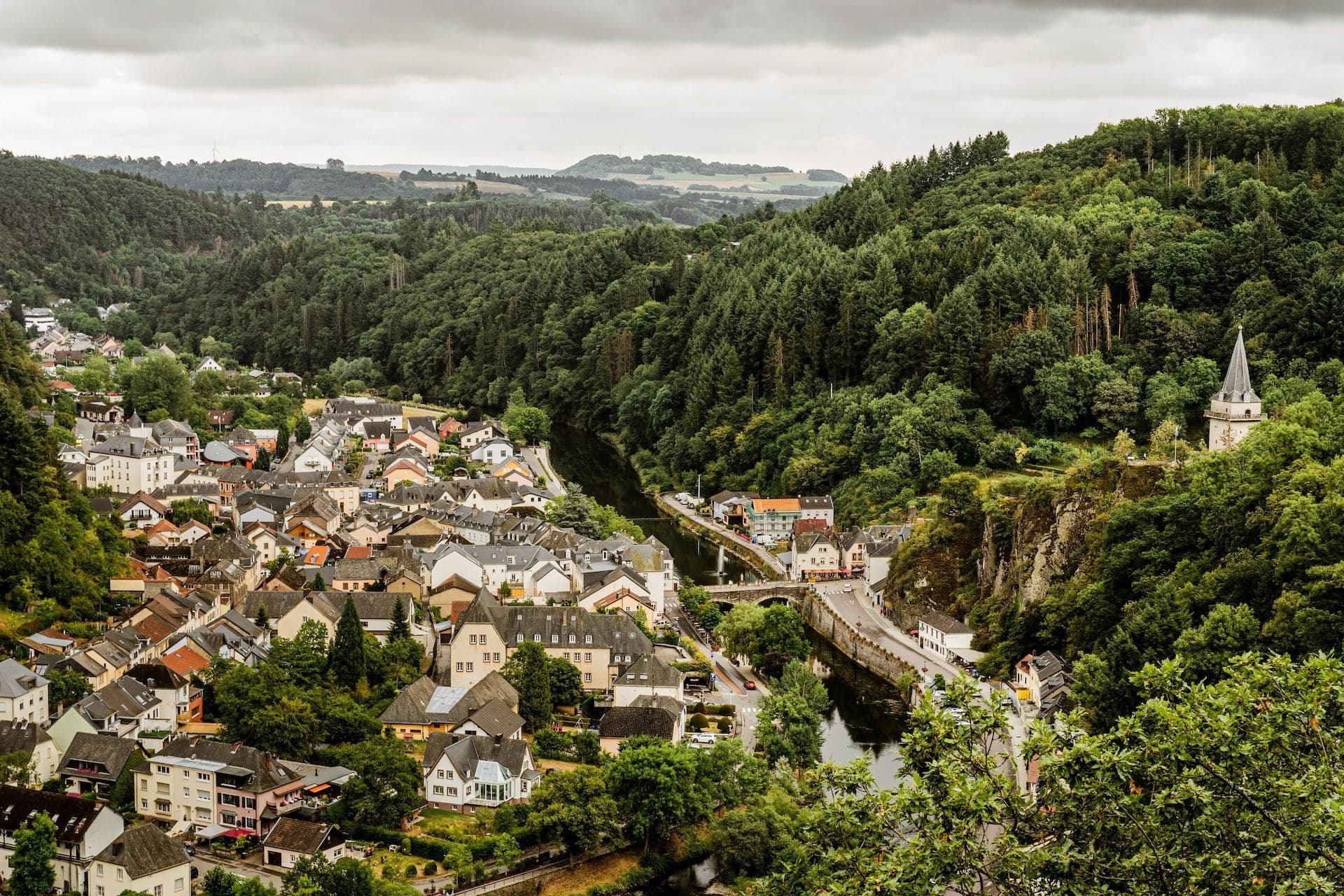
When you move to Luxembourg, you inevitably start wondering: "What is there to see outside the cities?" And the Grand Duchy has plenty to surprise you with, despite its small size.
Castles and ruins
Let me start with one of Luxembourg's main attractions. Apart from being a country of bankers and farmers, it is also a country of castles. There are 76 castles and fortresses in such a small area.
The most beautiful castles are in Vianden, Beaufort, Bourscheid, Clervaux and La Rochette. The last time I was there was in Bourscheid a few years ago. A close friend of mine came to visit, and I took her on a tour. I must say that at that time, many of the castles had not yet been restored as beautifully as they are now.
To be honest, I'm not a big fan of castles myself, but still, when you look at them, stand next to them, you feel the grandeur and power of a bygone era. I don't know how to explain it better, it's a feeling of belonging, very interesting.
Yes, their condition varies, but in recent years the government has been gradually buying up the most significant sites and restoring them. This is great because it not only preserves the cultural heritage that everyone loves to talk about, but also helps to give the space a new lease of life.
Of course, since we have started talking about fortresses, we cannot fail to mention what remains of them. Not all buildings have survived to this day; some have been partially or completely destroyed. But still, these are very atmospheric locations that are at least worth photographing.
And festivals, exhibitions, concerts and other events are often held in the ruins. In my opinion, this is cool because it introduces people to the location and makes it easy to do something themed.
The best ruins in our country are located in Dudelange, Dalheim, Esch-sur-Sur, and Esperange.
Festivals
Not much has been happening over the last few years. There were COVID restrictions in the country, and people themselves tried not to take any unnecessary risks. Now the restrictions have been lifted, and you can regularly see headlines such as "Such-and-such festival is back!" and "This is reopening its doors!" in the news. Well, you write about them often yourself.
From what I remember, it was the medieval festival in Dudelange. The theme is, of course, not for everyone; I'm not really into the concept myself, but I have to admit that it's very well done.
When you come to a medieval festival, it's like you're really in a village from that time. There are lots of people in costumes and craft workshops everywhere. As far as I know, there's even a whole stage dedicated to battle reenactments. Sword fights — that's what it's all about.
They also sell a lot of stuff here: treats, utensils, and items styled after medieval objects. Of course, gastronomic delights are not for everyone: for less sophisticated visitors, there are also regular stalls with grilled food and baked goods. But trying something like, I don't know, pork leg on a spit — that's cool.
Another interesting event is the Nuss Fest in Vianden, or Nëssmoort. As the name suggests, it's all about nuts. Nut dishes, nut drinks, nuts with honey, nuts without honey, nut cakes, nuts without cakes.
Vianden is an amazing place. When you go there, you meet half of your village. It doesn't matter where you live.
It is simply impossible to list all the interesting festivals and fairs — there are too many of them. It is best to keep an eye on the dates in the news. They are usually announced in advance.
Hiking and walking
Hiking is really cool. You can easily turn an ordinary walk into an adventure, especially since Luxembourg's nature is so beautiful that you can't help but look around almost all the time.
Few people know that the modern forests of the Grand Duchy were planted. In 1815, the northern hemisphere was hit by a natural disaster when there was no summer for three years and the temperature remained winter-like throughout. Not only did many people die, but so did many plants.
In subsequent years, the forests began to recover. Now they have become somewhat wild and look as if they have always grown here, but this is not the case. So when you go for a walk, keep this in mind.
Among the most popular trails, it is worth mentioning, of course, the Valley of Seven Castles. This is a hiking route of national importance. Its length, if I am not mistaken, is about 37 kilometres, and it passes, as you might guess, past seven medieval fortresses.
It goes without saying that covering such a distance in a single day is difficult even for the most seasoned hikers, so you can break the journey down into several stages. The route runs along the Aish River, and along the way you will pass numerous fields, forests and villages. All in all, it's a really worthwhile way to spend your holiday.
One of the easier routes is, of course, Müllerthal or Little Switzerland, as it is also known. Guided tours are organised here, or you can walk around on your own.
Just don't forget to bring sandwiches and a thermos with water, tea, fruit drink, whatever you like best. It's really easy to organise a mini half-day trip.
Lakes and rivers
When writing about places to swim, people usually mention Lake Verkhniy Sur. It is notable for being located in the centre of the park of the same name and for being the largest and, moreover, artificially created body of water in the country.
However, there is one river in Luxembourg that is no less popular among residents — the Sour River. Of course, there is no acid in it; it's just that the name Zauer translates that way from German.
In Luxembourg, it is perhaps better known as the "Sûre". It is the largest tributary of the Moselle, and the water here is crystal clear.
However, there are some downsides: the water is quite cold, as the river originates in the Ardennes. But that doesn't stop people. In summer, there are always lots of people here.
If I'm not mistaken, you can even barbecue here. At the very least, it's definitely worth looking for a spot.