
How to move to Luxembourg with a dog

Travelling with an animal is quite troublesome and consists of several mandatory steps. Veterinary services in different countries have their own established rules and procedures, so it is worth preparing for the trip taking into account the characteristics and requirements of the country you are travelling to.
What documents does a dog need?
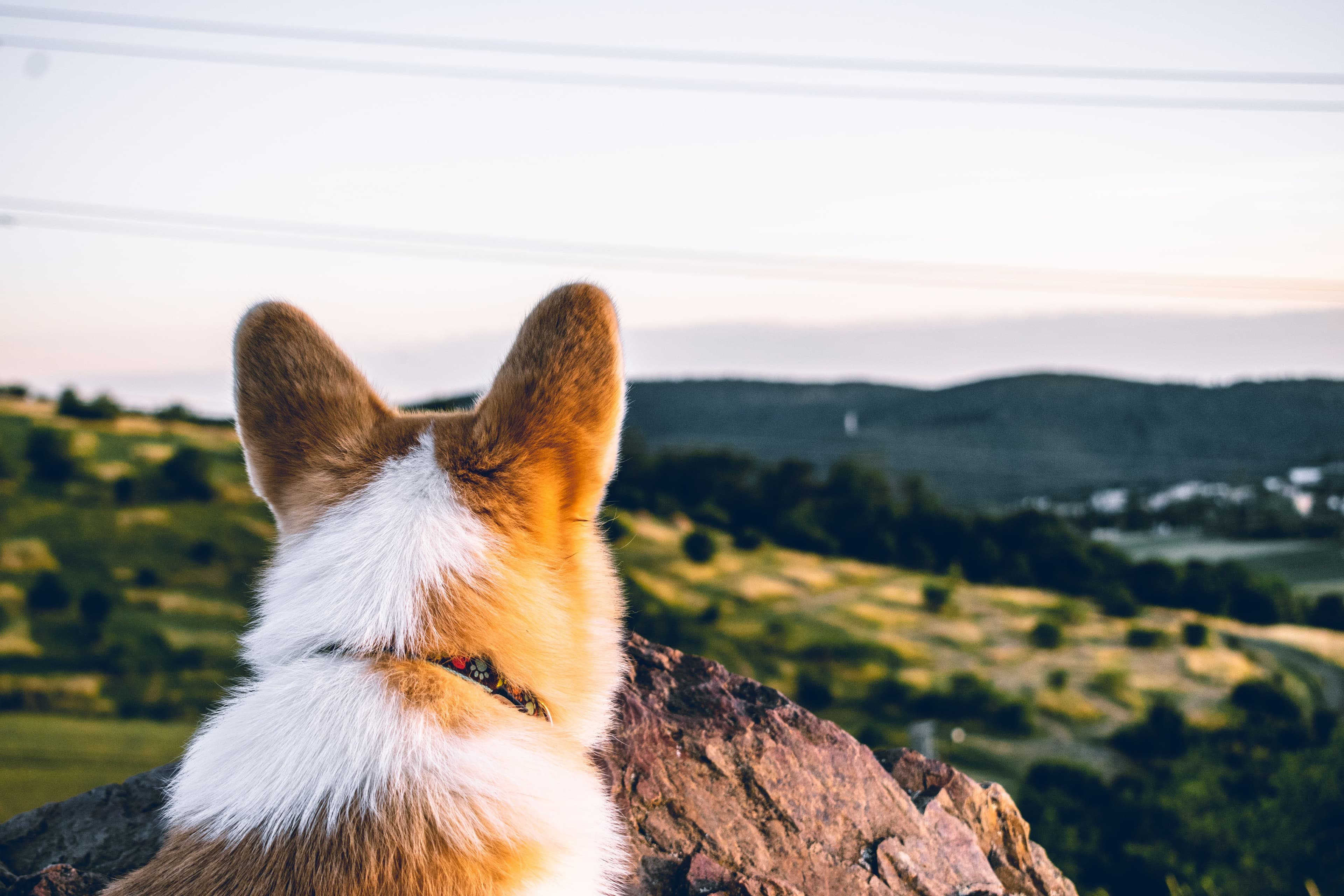
The dog's name is Sawyer, a purebred Welsh Corgi Pembroke. We had to choose between the names Sawyer and Athos. Now I remind my husband that Athos wouldn't have chewed the wallpaper when he was little)) He will be 3 years old in May, so by the time we packed, he had already been vaccinated against rabies.
When the hostilities began in February, I immediately had him microchipped, just in case. According to the rules, dogs and cats can only be microchipped after their initial vaccinations. It was easier for us because he was already an adult at that point.
Plus, our scheduled vaccination was planned for July, so we were perfectly on schedule. In addition, there was no need to undergo quarantine, as this was not our first vaccination. The fact that the EU does not require owners to have rabies titers also simplified the task.
Titers are an analysis of the antibody content in an animal's blood. The antibody titer in an animal's blood serum must be at least 0.5 IU/ml. If the titer of antibodies to the rabies virus is lower, the animal must be revaccinated, after which the test must be repeated at least 30 days later.
In general, document requirements depend on the country of entry. For example, if we were flying via Turkey, we would first have to take into account Turkey's requirements and then those of the EU. But since we flew directly, there were no additional complications.
The dog must have an international veterinary passport containing all records of vaccinations, deworming and other procedures.
We have a second passport because Sawyer tried to bite his first one. I filled it out myself in English. When everything was ready, we went to Vnukovo to get a certificate from the veterinary service to cross the border. This can be done at any airport, and, if I am not mistaken, there is a veterinary station in Moscow and St. Petersburg that also issues such certificates, but it is better to check.
Certificates must be issued no earlier than a few days before the trip! Check the current requirements with the veterinary service.
How to transport a dog
My husband flew out earlier, and his company covered his transfer, but only for him. So my dog and I had to make our own way.
From Moscow, we travelled to St. Petersburg on the Sapsan train. These trains have special carriages with separate seats for passengers with animals. There is a requirement to carry animals in transport, so we bought him a Skudo cage. They are quite large and spacious. However, I carried the dog in my arms the entire way to the northern capital. No one said anything, there was another dog travelling next to us, and everything was fine.
Skudo cages are quite popular among various transport companies. They are characterised by their durability and ergonomics and come in different sizes, which are indicated by numbers. Dogs of different weights and sizes require specific numbers. Please check with your vet for more information.
But the journey from St. Petersburg was more interesting. I called various companies to find out what transport options were available. It was not possible to travel by bus with a dog. I suppose that the checkpoint where buses pass through simply does not have an animal inspection point. Perhaps this is to avoid delaying traffic. Therefore, I had to book a private transfer from the hotel directly to the airport in Helsinki.
There were several options. One company quoted a price of 35,000 roubles, another 90,000. Of course, I chose the cheaper one, but the trip was still luxurious. I don't know if it's always like that, maybe they just sent the driver who was available, but we travelled in a Mercedes with a "korzh".
It was expensive, of course, but plane tickets at that time were astronomical. I couldn't travel with my dog on my own. I have a driving licence, but what would I do with the car afterwards? No one would take it. There was no one to drive us there either, so we decided that a transfer was the best option. In the end, this trip turned out to be cheaper than flying from Moscow.
The most expensive part turned out to be the transfer. Flights from Helsinki to Paris are generally not very expensive. Plus, my husband used his frequent flyer miles, so that cost very little.
At the border with Finland, they checked all of Sawyer's documents. The border guard didn't even look at the dog itself — the certificates were enough for him.
When we arrived at the airport, there was still plenty of time before departure, so I checked in early. I was told that I didn't have to check in the dog yet, so I took it for a walk for an hour. When we returned, we met another girl with a dog, and she asked if I had bolts for the cage. She also had a dog, but it was quite large, bigger than Sawyer. So, her cage was fastened with real bolts, strong metal ones.
Of course, I didn't have any bolts. Only the latches on the cage itself, which I began to hastily fasten. Fortunately, no one checked anything.
Bolt fastening is one of the most common requirements for air transport. This type of fastening helps to increase the strength of the cage and prevents it from accidentally opening during transport. When preparing for transport, we recommend that you check the requirements of the specific carrier.
Then they checked our documents at the gate and sent us to a separate room to check in the cage as luggage. There I kissed Sawyer, said goodbye, and went to board the plane.
I don't know what the temperature was in the animal compartment, but when I picked up the dog in Paris, he happily jumped into my arms and looked perfectly healthy. There were no ill effects from the flight. While still in Moscow, on the advice of a vet, I bought a sedative tablet for the dog, but decided not to give it to him because he was already calm. By the way, we flew with Air France because this company was recommended as a reliable and responsible carrier.
A little bit about Paris. When I arrived, I couldn't figure out where to find my pet for a long time. Everyone just pointed and said, "Go there, then go there." In the end, I came to the conveyor belt for oversized cargo, and he really came out to me on that conveyor belt! His entire cage was wrapped in sturdy rope. I didn't do that, so I guess the airport staff in Helsinki did it.
A safety cable is one of the options that an airline can use to secure the cage further. This is usually done if the carrier itself is not strong enough or does not have additional straps, as in the case of Lada.
They didn't ask for any documents at all. I think it's because the flight was from the EU to the EU. Then we took a train to Germany because there was no direct rail service between France and Luxembourg in the summer of 2022. On the train, just like on the Sapsan, he rode on my lap. The only thing was that my husband had read somewhere that he had to wear a muzzle. We bought one, but I don't remember putting it on him. Well, just in case they asked for it. But no one asked for anything, and the dog behaved well.
And on the bus from Germany to Luxembourg, no one asked any questions or made any demands either. We travelled peacefully with the dog on our lap. This part of the journey was very relaxing.
How to find accommodation with a dog
This is not a trivial question. I have seen many comments in chat rooms and heard from people that it is very difficult to find accommodation with a dog in Luxembourg. Or with any pet, for that matter. See chat.
We started viewing properties while we were still in Moscow. Several times, they promised to send us the contract, but then they just disappeared without a word.
In the end, we found an agent who accompanied us. He has two dogs himself, plus he liked us as a couple, and we sent him photos of Sawyer, of course. In short, he negotiated with the flat owner and vouched for us. Plus, we provided our employment contracts to confirm that we were financially secure and could support a pet, and I suppose it also helped that we could cover the cost of repairs and so on if necessary.
But it's a matter of luck, really. I can't give any advice here. I know that many people have real problems finding a flat. I hope that everything works out as quickly and as well as possible.
How to register a dog in Luxembourg
Upon arrival in Luxembourg, there are several steps to follow. We haven't even gone through them all ourselves yet.
First, we went to the vet for a general check-up. Korzhik was examined thoroughly, and what surprised and amused me greatly was that they even measured his blood pressure with a tiny tonometer. I had never seen such instruments for dogs, only for people. Cuteness squared.
Then you need to replace the veterinary passport. We had an international passport, but not a European one. So we had the document reissued. I'm not sure if this is a strict requirement, but with this passport, he will definitely be in the European system. If the dog suddenly gets lost, it can be identified by its microchip and returned to its owners.
We went through the vet, but the process is not quick. They took all my dog's documents and sent them all the way to Brussels — registration and paperwork happen there.
The next step is insurance. In order for your dog to be officially registered in Luxembourg, it must be included in your insurance policy.
After that, you need to go back to the vet to get a certificate confirming that all the dog's documents are in order. I already have such a certificate. All that remains is to go to the local council and complete the registration.
After that, the local council will calculate the tax on the dog, which will need to be paid once a year.
We do not yet know how much it will be, because it depends greatly on where you live. So you need to go there soon and then receive a receipt by post.
And don't forget about regular vaccinations. Everything is regulated here just as it is in Russia. Once a year, your pet will receive a rabies vaccination. Plus, you need to regularly treat your pet for parasites: give it tablets for ticks, worms, and so on.
The key difference is that these medications cannot be purchased at a regular pet shop — only at a veterinary clinic. Moreover, a doctor must write a prescription, otherwise they will not be sold.
Is pet insurance really important?
We had an insurance claim. One day in late February, my husband was returning from a walk with Sawyer. It was already quite dark, and they were not far from a neighbour's house. This neighbour has a huge dog — a Romanian Carpathian Shepherd Dog.
In general, the dog weighs 65 kilograms, is black, and was not visible in the dim light of the street. We sometimes hear or see her on the neighbour's property, but this time it was different.
This dog gnawed a hole in the fence, went outside and waited for my husband. When he came closer, the dog rushed at Sawyer, grabbed him with its teeth and threw him aside. My husband grabbed the "cake," yelled at the dog, and it went back through the hole it had gnawed. Maybe it was frightened by the menacing male voice, or maybe it knows some commands after all.
Another neighbour saw everything and let my husband and the dog into his flat, helping to call the police. The police and my husband tried to call the neighbour, but it turned out that his doorbell hadn't worked for several years. In the end, they left a note and took the dog to the clinic.
The doctor at the clinic examined the dog and gave him three injections. They contained painkillers, antibiotics and something else, I think it was morphine. However, she said she couldn't operate on the dog because the wound was on his chest and hair could get inside, and that's where his lungs and heart are.
There were two options: go to Tionville and leave the dog overnight, or take him with us in the morning. We decided to go in the morning.
We were forbidden to feed Sawyer, only allowed to give him a little water. Also, at night, in order to monitor his condition, we allowed him to sleep with us in our room. He usually sleeps in his place in the hall. During the night, I woke up to the sound of his stomach growling loudly — we feed him after his walk, so this time he went to bed completely hungry. I felt very sorry for the little one.
In the morning, we arrived at the clinic, and he was taken in for surgery. They shaved a square patch of fur on his side, patched him up, put a cone of shame on him (the ironic name for a post-operative collar for animals. Ed.) and gave him back to us. It probably helped that corgis have thick undercoats, so the wound wasn't too serious. I dread to think what would have happened if Sawyer had been replaced by another small dog.
All these expenses, the operation, medication, travel to the clinic — everything was covered by insurance. Even more than that: they also paid for grooming services. After the operation, we couldn't bathe Sawyer for a while. We wrote a request, and the insurance company paid for a trip to the dog groomer!
Incidentally, the neighbour came to see us the next day. He apologised profusely and was very friendly. We believe this was to prevent us from reporting the incident to the police. The consequences could have been very serious. But we decided not to report it. Everything ended well, and they are our neighbours after all; we still have to live next door to them.
The police came by and asked how we were doing and if everything was alright. They left a business card with a number on it, I don't know whose it was, a detective's, I think. They said to contact them if anything happened.
I hope my experience will help someone who is moving. Good health to your pets!