
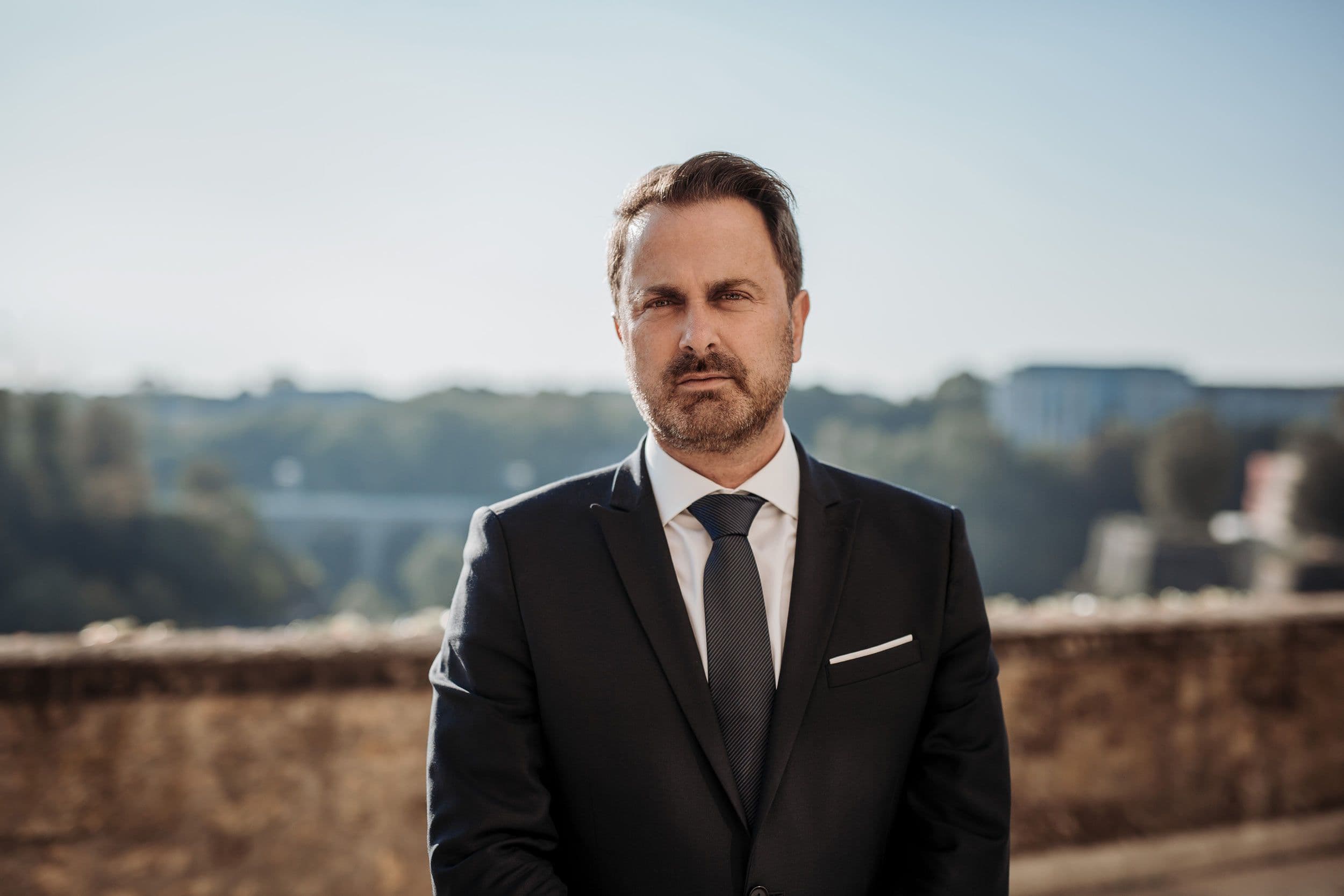
Xavier Bettel has criticised the EU’s foreign policy
Demokratesch Partei website
Luxembourg’s Minister for Foreign Affairs, Xavier Bettel, commented on the outcome of the referendum in Iceland, where 52.8 per cent of citizens voted against resuming negotiations on accession to the European Union. In the diplomat’s view, this result must be respected, despite the country’s deep integration through the single market and the Schengen Area. At the same time, the results of the vote should prompt reflection within the Union itself, where there is a growing tendency to blame Brussels for all emerging problems.
Xavier Bettel emphasised that the EU should not rush the enlargement process for geopolitical reasons. All candidate countries, including Ukraine, Moldova, Montenegro and the Western Balkan states, are required to fully meet the Copenhagen criteria. At present, Montenegro is making the best progress, whilst Ukraine and Moldova still have a long way to go. The diplomat rejected German Chancellor Friedrich Merz’s (Friedrich Merz) to introduce intermediate forms of membership (‘partial membership’), citing the current difficulties in relations with Hungary as an example of the risks involved in admitting countries before all reforms have been completed.
Disagreements amongst the bloc’s members are significantly weakening its position on the international stage. Xavier Bettel expressed regret that there was not even a simple majority within the EU to impose sanctions against Israeli ministers Itamar Ben-Gvir and Bezalel Smotrich due to their harsh remarks directed at Palestinian civilians.
Due to the deadlock on decisions at the pan-European level, Luxembourg is exploring the possibility of introducing national restrictions on trade with the occupied Palestinian territories, which would require amendments to the 2018 legislation. Nevertheless, the diplomat urged people not to overestimate the significance of these measures: Luxembourg’s annual trade turnover with Palestine amounts to less than 15,000 euros, whilst the EU’s total trade with all Palestinian territories does not exceed 55 million euros. Consequently, such steps are purely symbolic. The main problem with the EU’s diplomacy remains the disparity between its rhetoric and its actual means of exerting influence — a situation that Xavier Bettel likened to ‘a dog that barks loudly but has no teeth’.
Referring to the conflict with Iran, Luxembourg’s Foreign Minister cast doubt on the effectiveness of military pressure on Tehran. He noted that hostilities had begun without an international mandate, and that the expectation of a swift collapse of the theocratic regime had proved to be mistaken. As a result, external pressure may only serve to strengthen the position of the Iranian authorities.
Nevertheless, the international community must not allow Iran to establish control over the Strait of Hormuz or to impose tolls on ships passing through it. Any potential blockage or monopolisation of this strategic route would set a dangerous precedent for global logistics. This would lead not only to a rise in oil prices, but also to higher fertiliser costs, which would directly affect food prices and hit the poorest countries hardest.
Commenting on the rise in popularity of far-right parties in Europe, such as ‘Alternative for Germany’ (Alternative für Deutschland), as well as movements led by Marine Le Pen in France and Nigel Farage in the UK, the diplomat urged mainstream parties to analyse voters’ genuine concerns rather than simply dismissing their views.
He cited the issue of public safety and the public’s perception that offenders go unpunished as an example. In response to these concerns, Luxembourg plans to introduce a fast-track judicial procedure for a number of offences. Xavier Bettel emphasised that “impunity is the main enemy of democracies”, and that the absence of strict state control inevitably leads to the strengthening of radical political forces.