How Luxembourg is adapting its capital to the heat
Max Power, Unsplash
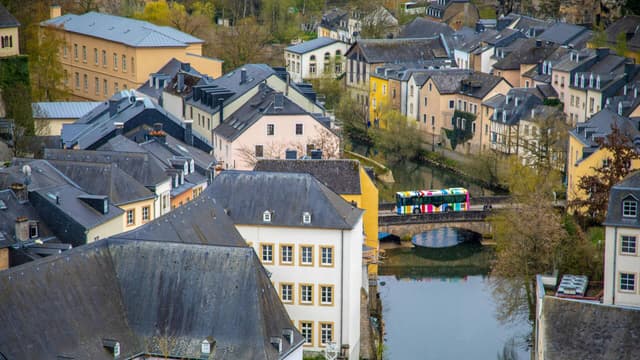
Luxembourg City Council has unveiled a comprehensive strategy for greening the city. The initiative comprises seven priority projects spread across 37 sites in the capital. The programme, designed to run over the next five to ten years, aims to adapt the city’s infrastructure to rising average temperatures and more frequent heavy rainfall.
As part of the pilot phase, the local authority plans to introduce greenery to its own administrative buildings on Rocade de Bonnevoie, as well as to the wall adjacent to the road near the footbridge. At the same time, between mid-July and mid-September, benches and leisure facilities will be installed in the square by the church in the Bonnevoie district as part of the ‘My district, my place’ initiative. Deputy Mayor Maurice Bauer emphasised that, in this way, the municipality aims to lead by example in demonstrating its commitment to the principles of sustainable development.
The priority areas were identified on the basis of a detailed spatial analysis. As environmental specialist Pierre Schmitt explained, the plan took into account tree canopy density, data from the green space register, the location of ‘heat islands’ and areas that naturally generate cool air. Particular attention was paid to the issue of extreme rainfall: new green spaces are designed to intercept rainwater, preventing it from accumulating excessively at ground level. The city’s mayor, Lydie Polfer, noted that the technical plan includes a wide range of measures — from removing impermeable asphalt surfaces to planting trees and creating shaded areas.
As well as implementing municipal projects, the authorities intend to encourage private initiatives. In September, a proposal will be put before the city council to provide residents with advice and additional grants for landscaping their own plots of land and properties. It is expected that municipal support will amount to an additional 50 per cent on top of existing state payments.
Despite the scale of the programme, a number of key locations, including Place Guillaume II, Glacis and Place de Paris, will remain unchanged. This is due to constraints on parking and tram infrastructure, as well as the need to host major public events, such as the annual Schueberfouer fair and the City Sounds music festival. Nevertheless, Polfer has not ruled out the possibility that, during the future redevelopment of the upper part of Glacis, the approach to its greening may be reviewed. Until then, the city authorities recommend that residents avoid open spaces during periods of extreme heat and seek shelter in the capital’s existing parks.