Luxembourg's political system through the eyes of an expat
Why can you vote in this country even if you are not a citizen, what parties exist, and why is this important?
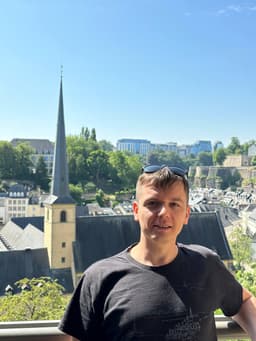
Artem has been living in Luxembourg for almost a year now. In June, he and his wife took part in the municipal elections, but before that, he familiarised himself with the peculiarities of the country's electoral system.
Does an expat need to understand politics?
This question boils down to whether one should participate in the elections at all.
Democracy is something that only works if everyone participates.
This is what Corinne Kahn, former Minister for Family and Integration, told us on Integration Day. After the elections, she transitioned from minister to alderman of Luxembourg.
I think that's fair. If everyone ignores politics and ignores elections, at some point the authorities will start doing whatever they want.
Democracy is generally quite fragile. For it to function and protect the population from authoritarianism, it must be constantly fuelled by the will of ordinary people. Elections are one of the tools that people use to influence what happens in their country.
In Luxembourg, Russian-speaking audiences are more conscious and more eager to understand everything. I initially started collecting and structuring information for myself, then I saw a request in the Luxtoday chat and decided to share my findings. I was pleasantly surprised by the positive response.
In general, when answering the question "why is this necessary?", it is worth simply reminding yourself that it can directly affect your life in the municipality.
Because its appearance, the implementation of certain programmes, and the development of infrastructure directly depend on the choice of politicians and their ability to fulfil their promises. Consequently, if you are dissatisfied with the results, you give your vote to others.
What makes Luxembourg different
Luxembourg is in a unique situation; at least, I think there are very few countries like it.
Expatriates vote
Modest campaigning
Elections are both a right and a duty.
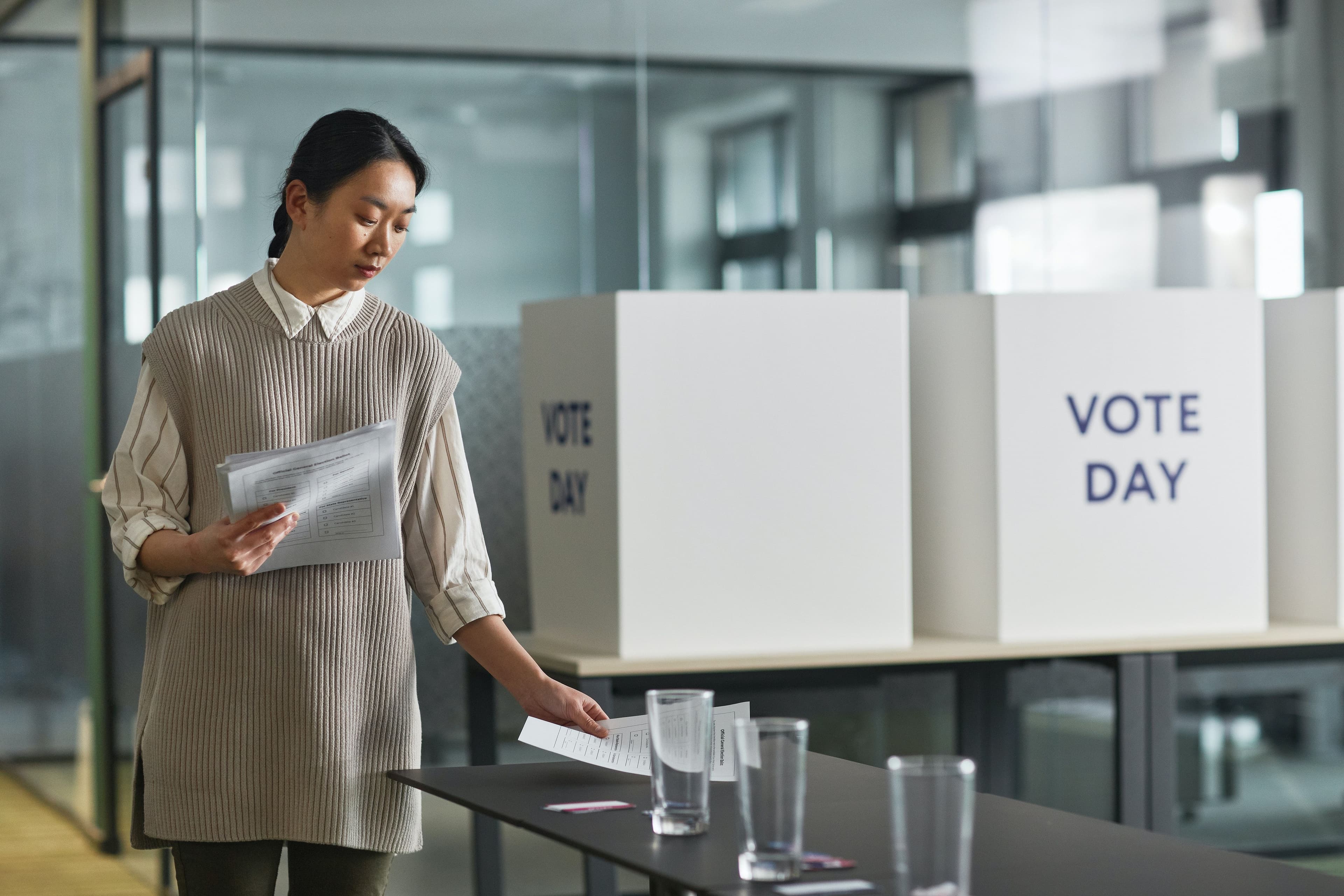
How the voting process works
It turns out that we had super easy elections before. It becomes clear when you have something to compare it to. You came, marked your ballot, and left. Here, it's a little different. In fact, at first it looks and sounds complicated, but in essence, it takes 5-10 minutes to figure out, and then everything becomes easy.
The first and very important difference is how the mark is made. I had the opportunity to work in election commissions in my homeland. You see all sorts of things there. There were even cases where obscene drawings were made in the box for the mark. And the most interesting thing is that in Russia, it still counts. Here, it's not like that.
In Luxembourg, you can only put a cross or a tick. It's even shown on the merchandise. In short, two crossed lines is the correct way to do it. That's it! If you have a circle, a tick, or a shaded box, the ballot paper will be considered invalid.
There should be no extraneous marks, lines, inscriptions, or anything else on the form. Otherwise, what will happen? That's right, it will be considered invalid.
The ballot paper will also be invalid if anything is enclosed with it. I have often seen pensioners bring letters describing their difficult lives, written in small handwriting on four sheets of paper, wrap them in their ballot papers and drop them into the ballot box. This works in our country, but not here. There should be no foreign objects in the ballot paper.
Another unusual thing about the polling station, especially for Russian speakers, was that everyone voted with a pencil. My friends asked why, and whether it was possible to use a pen, for example. They were told that if they wanted to, they could of course bring a pen, but the staff were very surprised by the question.
Here, people don't even think that election commissions could alter or correct anything.
And the ballot itself is interesting, of course. How are we used to it? You get a form with a list of candidates, tick the box next to the one you want, and that's it. Here, in municipal elections, each party has several representatives. Their number varies depending on the population of the municipality. There may be 7, 9, 11 candidates, and so on. In Luxembourg, there are 27, because it is the capital. The number is always odd to avoid a situation where the votes are divided exactly equally. Well thought out!
The form itself contains a list of parties. Each party list contains a list of candidates. Opposite them, note, there are two columns with boxes. What does this mean? It means that you can cast not one but two votes for a candidate. You have as many votes as there are aldermen to be elected. If there are a maximum of 7 elected representatives, then you also have 7 votes. If there are 15, then you have 15 votes. And so on.
You can distribute your votes however you like, as long as the total number does not exceed the maximum allowed. You can give fewer votes, but not more. And if you don't want to give 1-2 votes to politicians, for example, there is an option to vote for the entire party and all its candidates at once.
In this case, you cannot mark individual candidates. That is, you either vote for the party as a whole or divide your votes manually. There is no other way; otherwise, the ballot will not be counted.
Once again, this is what the voting process looks like step by step:
- A few days before election day, you will receive a letter explaining where your polling station is located. The letter even includes a copy of the ballot paper.
- You arrive at the site;
- Present your document. In our case, it is a titre de séjour, but a passport will also suffice.
- You receive a bulletin;
- Go into the cubicle;
- You vote;
- You drop your ballot into the ballot box and leave.
What parties are there?
There are quite a few parties in Luxembourg, and what surprised and even delighted me is that there are some truly incredible stories. For example, there is a very real communist party. They are quite hardcore — red banners, sickles, hammers. And the most curious thing is that no one oppresses them, arrests them or puts them in prison. People just don't vote for them, and that's it. And they don't seem to particularly care.
Large parties in Luxembourg 4:
Christian Social People's Party (CSV)
Democratic Party (DP)
Social Democrats (LSAP)
The Greens (déi gréng)
All these parties, on the whole, constitute the political mainstream; they should not be thought of as standing at opposite ends of the spectrum. Radical parties are less popular in Luxembourg.
After them come the second-tier parties. They usually have few seats: one, maybe two. Nevertheless, they also exert pressure on the mainstream parties. The second tier includes the Conservatives, the Pirates (who, in my opinion, have been gaining popularity lately) and the Socialists déi Lénk (they are similar to the LSAP, but promote more left-wing views).
There are also small parties that are not represented in parliament at all, but are only represented in certain regions. These include the communists I mentioned earlier, for example. There are also conservatives, who for some reason are separated into a separate party. I don't know why they are separate from the CSV; perhaps there is some history behind this that I am not aware of.
There is a new Focus party, which I am very pleased with. I stumbled upon them, tried to characterise them, and I get the feeling that they are for everything good and against everything bad. And in general, I couldn't really place them on the political spectrum. I get the feeling that they are just riding the wave of populism for now.
There is another simply "amazing" party that I stumbled upon when I was preparing a post for the Luxtoday chat. It literally translates as "We are the people." And this is a gathering of quite interesting personalities who were able to include everything imaginable and unimaginable. There are conspiracy theorists, anti-vaxxers — you name it.
Is it necessary to vote in elections?
I think so. The state gives you, an expat, the opportunity to influence your life and what is happening around you. If you have this option, you should use it. Here, you are not treated like a migrant worker. On the contrary, you are a full member of society with slightly limited rights: for example, you cannot vote in parliamentary elections.
That's very impressive; I don't know of any other country that has implemented such a system. It would be a shame not to take advantage of the options offered and just go with the flow.