
Who is helping refugees in Luxembourg after 24 February, and how?
I had previously flown to Luxembourg regularly for work and already knew the country quite well. So when the offer to relocate came up, my family and I accepted it without hesitation.
How to become legal
When we moved seven years ago, I was relocating as an employee of an existing international company. It was a voluntary move, not a forced one, as has been the case for many people recently.
I became a legal resident as a salaried worker. My family became family members. Our company's HR department helped us, but the procedure was quite standard then, as it is now.
Now I can't remember what was the most difficult thing at first. I would say absolutely nothing 😊
We found a flat fairly quickly, sorted out buying a car, opening bank accounts and other formalities. The children quickly found places at school and maison relais in the commune.
There were probably some difficulties, but you don't remember them anymore. The impression from the first few months remained quite positive.
That was the case until the infamous events of 24 February. After that, a lot changed in everyone's lives. And I was no exception.
How to unite the Russian-speaking community
The answer came to me on the way to the Polish-Ukrainian border. We set off in five cars — three Russians, one Ukrainian and one Pole.
The goal was simple: to deliver humanitarian aid collected from friends and acquaintances and purchased with money that was partly their own and partly donated, and to bring refugees who needed to get to this part of Europe from the border.
On the way, we had plenty of time to try to make sense of what was happening and realise the scale of the disaster. We were not to blame for what had happened, but we felt responsible for the situation. Exchanging thoughts with our fellow travellers during stops, we decided that it was simply necessary to try to offer something that would unite the divided Russian-speaking community in Luxembourg.
So, I had an idea: to set up an organisation for all Russian speakers living in Luxembourg who were looking for ways to help refugees from Ukraine. And, in addition, to use culture as a way of coping with the moral pressure that each of us was experiencing at that time.
The idea is simple: bring people together by offering them various creative, cultural and intellectual activities. And, based on this growing community, implement humanitarian projects aimed at helping refugees and all those affected by these events.
The most important thing we have managed to do, in my opinion, is to truly unite several dozen people around our activities. And, of course, the real people whose hardships as refugees we have alleviated, even if only a little, are important.
How to help real people
At the moment, we have a permanent coordinator, Alisa: she is also a refugee and came to Luxembourg with her daughter. Alisa receives and processes all incoming requests, coordinates the work of volunteers, and assigns tasks.
- Some people need help connecting the heating in their homes, which has been allocated by the local authority, but details such as activating the gas supply contract have simply been forgotten.
- Some people need financial assistance to pay their medical bills — doctors are not willing to wait four months for reimbursement from the CNS and demand payment on the spot.
- Some people have arrived with their pets, but cannot afford to buy expensive food and medicine. We need to purchase the necessary items.
We have also been fortunate to collaborate with several talented individuals who, for example, have worked as photographers at our charity events. I believe that such contributions to integration, however small, are very important.
For us as an organisation, helping those in need is not a one-off event. We take responsibility for the promises we make and do everything possible and within our power to fulfil them.
For example, in April, we organised a concert by violinist Alena Baeva and her husband, pianist Vadim Kholodenko (who, incidentally, is Ukrainian).
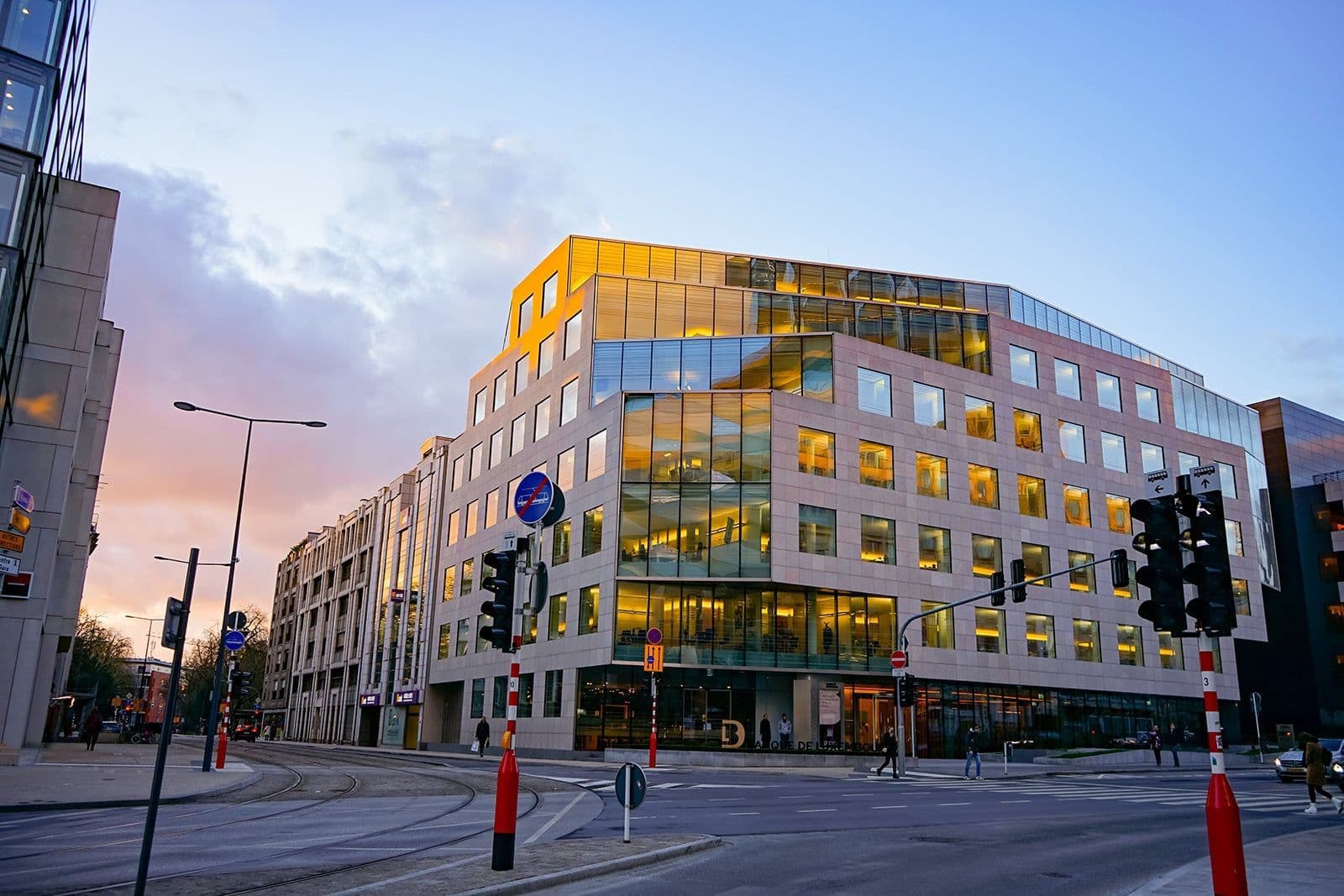
Through one handshake, we reached Alena, through another, the Banque de Luxembourg, which provided the venue. This is probably only possible in Luxembourg, given its small size.
For many, it was also a way to help: by purchasing a concert ticket, they could contribute to supporting refugees.
The concert was organised in support of Ukraine, and with the proceeds we purchased Ukrainian-language books in Kyiv for the Ukrainian library in Luxembourg. We also helped organise a trip to an amusement park for refugee children: children should be allowed to enjoy their childhood.
We are also constantly looking for volunteers and service providers — medical, veterinary, legal, educational, any! — who are willing to cooperate on preferential terms.
It does not have to be free, but, for example, with deferred payment, a discount or priority, as some problems are urgent and people simply cannot wait for an appointment in a couple of months.
It is important to help those who are forced to flee the war, not only from Ukraine but also from Russia. One of our tasks is to assist in the relocation of university students and teachers who are losing their places due to their publicly expressed positions.
In addition, we want to help refugees realise their business ideas. To do this, we need volunteer lawyers and business consultants who are willing to advise on legal issues related to legalisation, work permits, etc.
When shortcomings are an advantage
I like Luxembourg for its multiculturalism and lack of national prejudices.
It is a wonderful place to live with your family – peaceful and safe, with a good standard of education that opens up a wealth of opportunities for higher education in any country in the world.
And it is also an excellent place to establish or relocate a business.
If I had to mention something I don't like, I would point out the low population density. This makes it virtually impossible to develop the services we are used to in big cities — Uber, car sharing, food delivery at any time of the day. But, on the other hand, this is also a plus: it forces you to plan your time better 😊
If I were asked to describe Luxembourg in one sentence, I would say: "Almost paradise!"