
A language that needs no translation: an interview with choreographer Olga Kostel

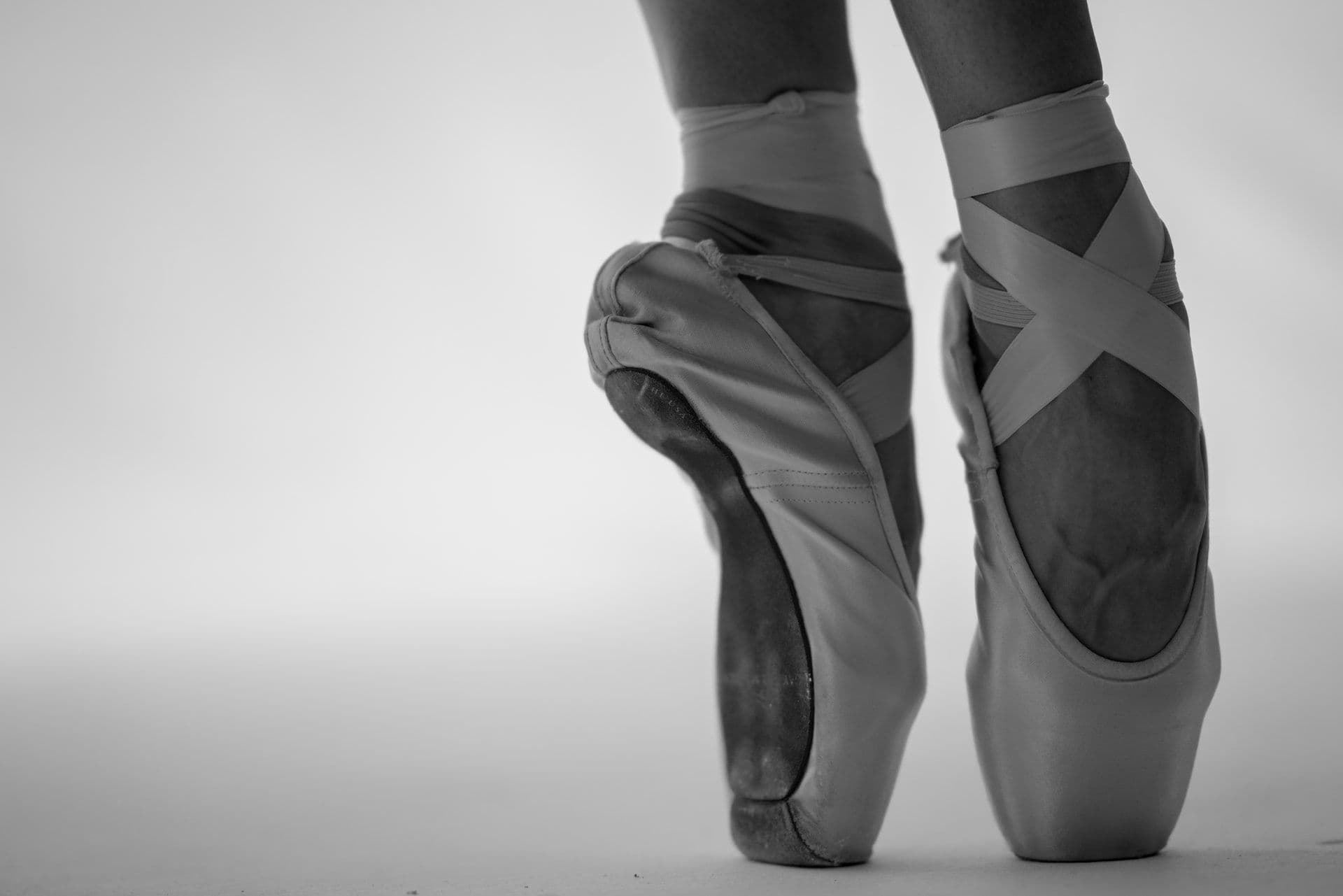
The project I am involved in features artists from Luxembourg and stars from the National Opera of Ukraine. It is a collaboration between the Luxembourg Ballet, the CUBE 521 theatre space and Opderschmelz Dudelange. The project is supported by the Ministry of Culture and the Luxembourg Choreographic Centre TROIS C-L.
Why does the average person need ballet today?
Not just ballet, but dance in general. Like literature, music, painting, and architecture, it is a special language that can express emotionally and accurately what we are sometimes afraid or unable to say directly. And that is its strength and beauty. Therefore, I think this genre has potential. Especially now, in such tense and difficult times.
Creating something aesthetically appealing to people is also a form of power. In my opinion, it is the only form of power that people do not resist. One way or another, people resist the truth, especially if it is unpleasant to them. But they do not resist beauty.
Without being too modest, I can say that no one in the local dance scene does anything even remotely similar to what our troupe does. Usually, you see a few people dancing on stage. We take a different approach: live musicians, an entire orchestra (!) and ten dancers. Our audience sees a symbiosis of music, dance and costume art.
The visual narrative for the production is created by the team: we come up with the image ourselves and, once it is finished, send it off to be made.
For me, Carmen is not only a femme fatale, but also a feminist icon: she will be dressed like a bullfighter, in overalls. I want to show that she is in no way inferior to the opposite sex in terms of courage.
After all, for example, to tell the truth to someone's face, you have to be a truly courageous person. And Carmen essentially does just that, which is why she perishes: she is in control of her body and disposes of it recklessly and boldly, as she pleases. But there is also a touch of romanticism and mysticism in her character, of course.
Why Carmen remains relevant today
The reason is that the classics introduce us to universal archetypes. They are timeless and, in the case of ballet, they offer us a way to understand without words what is always important to human beings. Luxembourg is incredibly multicultural; we have a diverse audience, not only locals but also many foreigners. We speak to them in a language that does not need to be translated.
Right now, I am working with precisely such global archetypes. In the autumn, there was Don Juan. And his, let's say, female counterpart — Carmen. I was interested in two aspects:
- the manifestation of beauty as an all-conquering force,
- The manifestation of feelings as an element that lifts a person up to the heavens, and then drags them down to the underworld. Perhaps the most interesting thing is that we may suffer, but when this element disappears, we seek it out again.
Observe how it works: modern people try their best to avoid disappointment. At the same time, there are numerous dating sites, all kinds of matchmaking services, and projects designed to help you find a partner so that you won't be disappointed, will fall in love, and will be happy. In other words, we really need this feeling.
And yet we cannot fully comprehend love as a phenomenon. No matter how much it has been studied — by Weber, Fromm, and before them, starting with Plato and Aristotle — no matter how much has been said about it, everyone has their own interpretation. When it comes to love, people talk about chemistry and biology, but we still don't understand what it is.
The theme of strong feelings — destructive and creative — has been with me for a long time. Five years ago, Anna Karenina was the crowning achievement of my work. I lived with Tolstoy for three years: I read all his diaries, analysed his creative periods, watched how he wrote in parallel, studied Tchaikovsky's music and how the composer was inspired by Tolstoy's work. And so a play was born, which is considered the best in my native country and is still running successfully.
Then my imagination was captured by Don Juan, the theme of collecting and a certain boredom that appeared in the modern man when religion faded into the background and the desire to "copy" emerged. And in contrast to this — love as something real, rare, a miracle. In our era, when miracles multiply very quickly, this feeling disappears. Don Juan, however, rejected genuine feelings, real miracles, and simply tried to repeat the moment over and over again. I think that was his problem.
Carmen is the opposite. Here, I am more interested in the inner world of a person, how vulnerable they are to their feelings. These feelings can lift you up and throw you into the abyss. But as soon as they disappear, having experienced them once, a person tries to find them again.
Reading Merimee's biography, I see not only him, but also our contemporaries. The writer never had any real relationships, they were always just fleeting feelings. As a result, his personal life was a failure.
I can see that Mérimée wrote a lot about himself in Carmen, so much did he crave love. And how much he needed it.
To conclude the theme of strong emotions and classical imagery, I would like to stage Romeo and Juliet in the future. At its heart is love and senseless feuding, the reasons for which no one remembers anymore.
The body is always a mirror of its era. And culture is always a prohibition on something. Even if we stage classical works from the Romantic period, it is important to present them in today's language. In the 18th century, the body behaved in one way, and in the 21st century, it behaves completely differently.
What makes this ballet special
I would say that it is a symbiosis of different ballet schools. There is definitely a difference between how ballet is taught in Belarus and Russia and in Europe. Especially in terms of skill — the CIS has a very fanatical approach! Dostoevsky wrote that "the Russian man is broad, I would narrow him down." If it's the end of the world, then let's go all the way. It doesn't work to be gentle.
But Europeans are more balanced, there aren't too many of them, I think. And this is also evident in their profession. Of course, they also work a lot, but they do everything according to schedule, without fanaticism. Europeans are very disciplined at work. Maybe they are even a little dry.
While CIS dancers are more emotional, they, on the contrary, need to be kept under control. Their fanaticism and emotionality can take various interesting forms, but it is always difficult at first.
I think they complement each other perfectly, like yin and yang. I think it will be obvious on stage.
We are putting this production together in a short time frame. Usually, productions take six weeks, but now we are doing in a month what normally takes two. That's why we are working in three shifts, but I think everything will work out.
In the future, I hope we will move on to larger-scale and more complete performances. Right now, we are painting with our bodies, and that is already unforgettable. If we add landscapes and scenery to what we already have, the result will be something truly amazing.