A meteorite flew over Luxembourg
Planet Volumes
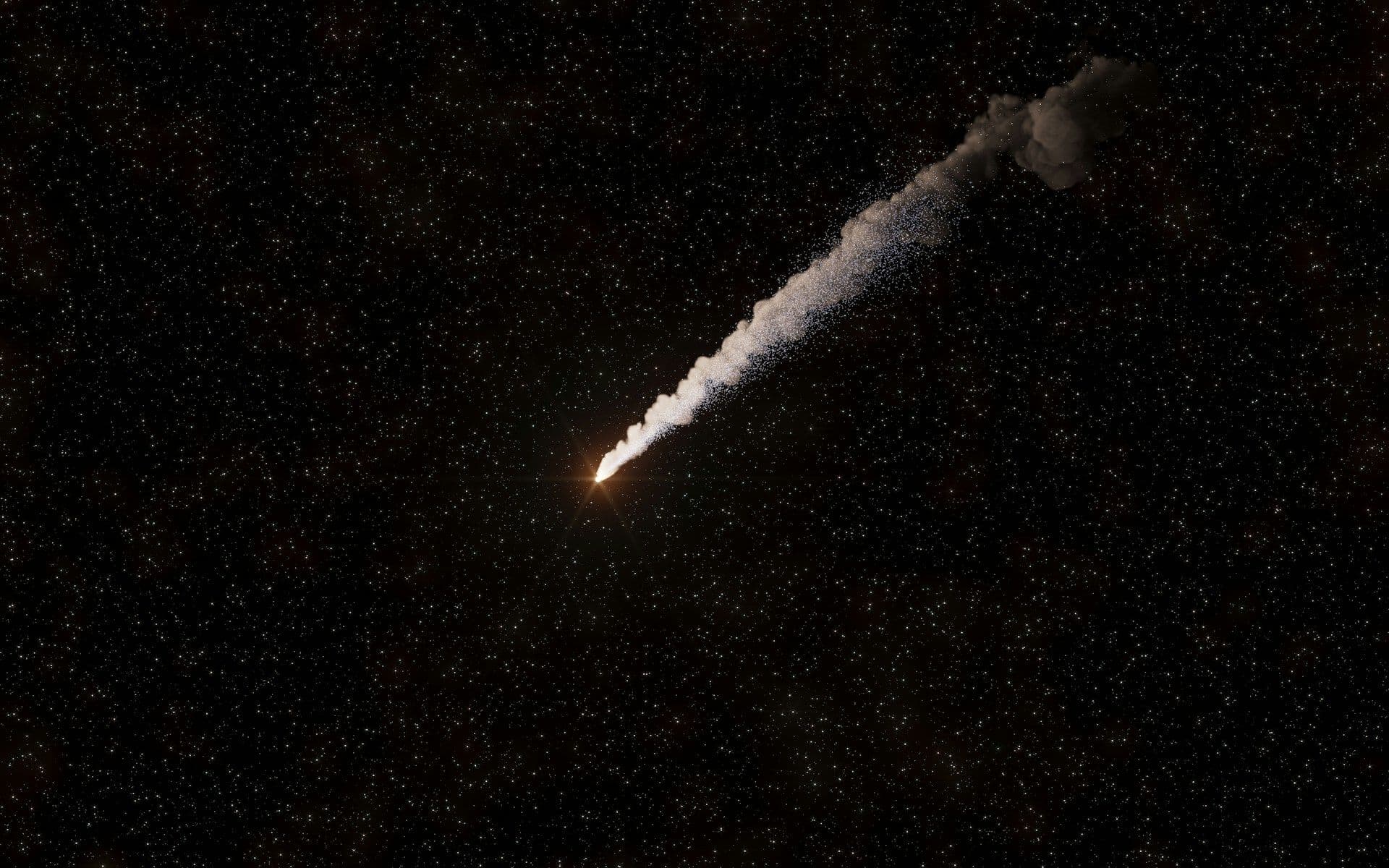
On Sunday at around 7 p.m., residents of Luxembourg and neighbouring regions in Germany witnessed a rare astronomical phenomenon. A large luminous object, classified by experts as a fireball, crossed the sky and then broke into pieces. Eyewitnesses from various towns, including Flaxweiler and Hesperange, reported an unusually bright white trail that momentarily illuminated the interiors of houses. According to witnesses, the intensity of the light was comparable to car headlights shining directly into windows, and the sonic boom that followed 30 seconds later caused walls and window frames to vibrate.
Former president of the Luxembourg Amateur Astronomers Association Nicki Feierstein explained that the observed object was originally a meteoroid — a solid body moving through space. When it entered the dense layers of the atmosphere at a speed of 60,000 to 70,000 km/h, friction generated enormous thermal energy, turning the body into a glowing meteor. It was the excess pressure and thermal stress that led to fragmentation and the characteristic explosions heard by residents of the region. Those particles that overcome atmospheric resistance and reach the Earth's surface are officially called meteorites.
The event had not only visual but also material consequences. German police confirmed that fragments had fallen on the territory of the federal state of Rhineland-Palatinate. Damage to roofs and facades of private houses was reported in the areas of Hunsrück, Eifel and the city of Koblenz. At the same time, experts from the European Space Agency (ESA) began analysing telemetry data and video recordings to accurately determine the trajectory and composition of the object.
Despite the prevailing view that the celestial body is of natural origin, alternative hypotheses are being discussed in scientific circles. An astronomer from Heidelberg pointed to the specific orange hue of the glow, which in some cases may indicate the combustion of "space debris" — the remains of satellites or rocket stages. In particular, the version about the fall of elements of SpaceX's Falcon 9 rocket was considered. However, most meteorological services, including Météo Boulaide, lean towards the version of a dense cloud of space dust, similar to the Perseid stream, but with a higher density and mass of elements.
Although such incidents cause concern among the population, experts emphasise that near-Earth space is filled with such objects, and their entry into the atmosphere can occur at any time of the year, regardless of known meteor showers.