People in Luxembourg still throw away too much rubbish
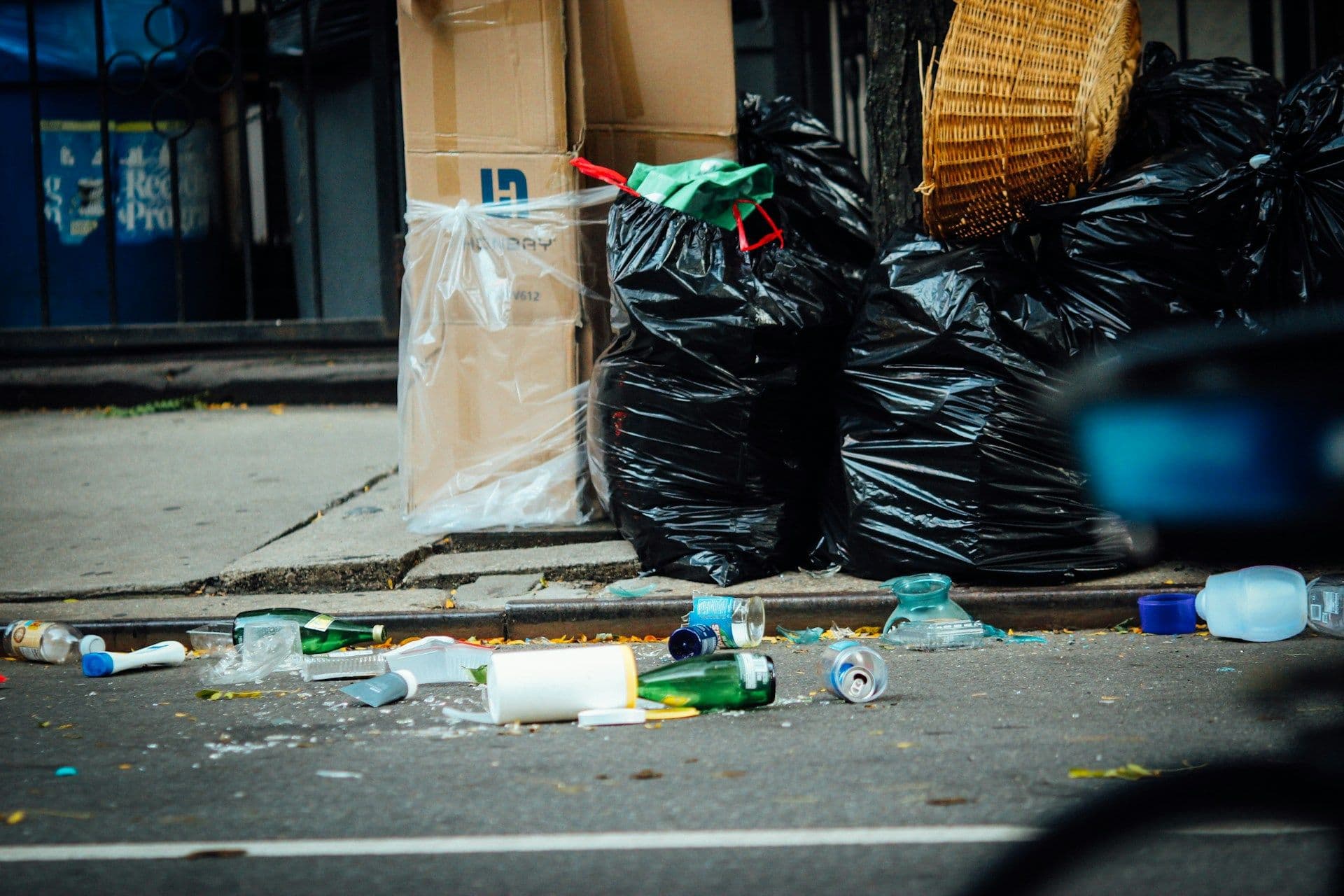
Jon Tyson, Unsplash
The seventh national analysis of household waste composition for 2024/2025, conducted by the Environment Agency (Administration de l'environnement), recorded a decrease in average waste generation to 154 kg per capita. This is 5.4% less than in the 2021/2022 period. This positive trend is due to the development of separate collection systems and public awareness campaigns; however, there remains significant potential for improvement: experts claim that almost three-quarters of the contents of general waste bins could be recycled if sorted correctly.
Serge Wilmes, Minister for the Environment, Climate and Biodiversity, presented data based on an analysis of 15.6 tonnes of waste from 15 representative municipalities. One of the key findings was the impact of the pay-as-you-throw scheme. In municipalities where container identification and weighing have been introduced, each resident produces on average 27 kg less mixed waste per year. The economic incentive encourages households to take a more responsible approach to sorting.
Despite an overall reduction in the proportion of packaging to 21.6%, researchers observed a contradictory trend in the paper products category. Whilst the volume of paper and cardboard in general waste bins fell by 29%, the number of paper bags rose by 48%. The authorities emphasise that clean or slightly soiled bags should be sent for specialised collection for recycling, rather than being disposed of as general waste.
The report pays particular attention to bio-waste, which accounts for 37% of the weight of the ‘black bin’, equivalent to 57 kg per person per year. It is noteworthy that 35% of this volume consists of food that could have been consumed, including unopened sliced cheese, meat products and edible vegetables. The use of a new waste analysis methodology has made it possible to more accurately identify such products in their original packaging, which were previously mistakenly classified as plastic.
The analysis also revealed a significant gap in waste sorting practices between urban and rural areas. Cities have a higher concentration of bio-waste (45 kg compared to 31 kg in rural areas), paper, plastic and hygiene products. The statistics confirm a direct correlation: the higher the population density, the less strictly residents adhere to the rules of separate collection.
At the same time, the proportion of hazardous waste, electronics and batteries remains consistently low. This demonstrates the effectiveness of the specialist Resource Centres and retail outlets. Nevertheless, the overall objective remains unchanged — to minimise the volume of waste sent to the SIDOR incineration plant or the Flaxweiler landfill site.