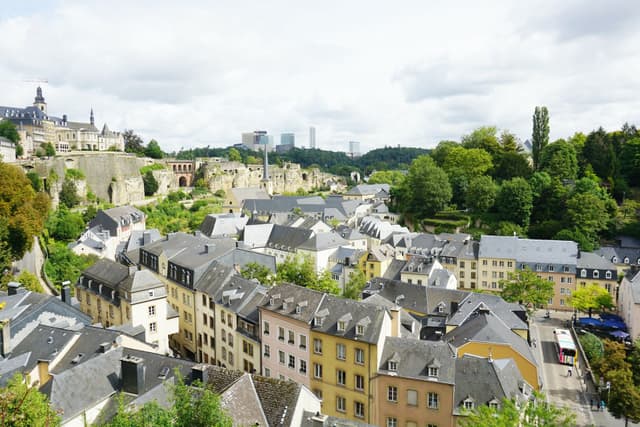
There will be no new cities in Luxembourg
Snap Wander, Unsplash
Minister of Home Affairs Léon Gloden has officially rejected proposals to expand the list of municipalities with city status. In response to a parliamentary question from André Bauler, a member of the Democratic Party (DP), the minister explained that the current list of 12 cities, including Luxembourg, Esch-sur-Alzette, Vianden and Wilz, will remain unchanged. The last time this status was granted was over a century ago, in 1907, when Dudelange, Differdange, Ettelbruck and Rumelange became cities.
Despite the desire of large municipalities such as Mersch to obtain this honorary title, the government does not see any practical sense in it. Gloden emphasised that city status in modern Luxembourg has exclusively symbolic significance. It does not grant any additional legal rights or financial advantages over ordinary municipalities. Moreover, the coalition agreement for 2023–2028 does not provide for the development of criteria for granting such status, as any fixed standards may quickly become outdated and fail to take into account the specific characteristics of individual regions.
Instead of changing statuses, the Ministry of Internal Affairs prioritises qualitative transformation of management:
Strengthening autonomy
Professionalisation
Merger of communities
Gloden paid particular attention to financial fairness. State subsidies are now distributed on an equal basis: every resident and every child should receive the same level of services regardless of the status of their place of residence. The reforms also affected the mechanisms for equalising municipal budgets and contributions to the employment fund. In this way, the ministry is making it clear that the real well-being of citizens is more important than official status.