Five years after the flood: Rosport-Mompach is prepared for future natural disasters
Jorick Jing, Unsplash
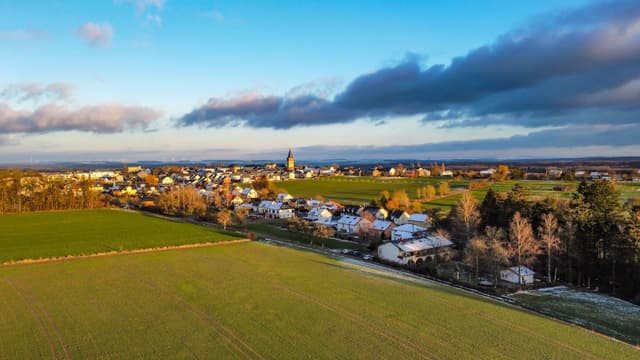
In mid-July 2021, Luxembourg was hit by unprecedented flooding, which affected the municipality of Rosport-Mompach particularly severely. This week, the mayor of the municipality and CSV MP Stéphanie Weydert presented a report to local residents on the work carried out over the past five years to prevent such damage in the future.
According to the mayor, although the country managed to avoid any loss of life, the material damage was enormous. In Rosport-Mompach alone, around 200 households, several businesses, various associations and municipal facilities were affected by the disaster, particularly in the towns of Steinheim and Bour (Bour).
As part of their adaptation strategy, the local authorities have analysed and implemented 278 protective measures. To date, the municipality has been equipped with retention basins, protective walls and dykes. In addition, special risk maps have been drawn up for residents, showing at what water level a particular house would be affected, and individual advice has been provided.
At the same time, the local council has reviewed its approach to urban planning. The multi-purpose centre in Bour had to be demolished, and a new educational campus is now being built on the site, surrounding the existing school. The project is being carried out in line with the ‘build it better than it was’ principle proposed by the Ministry of the Interior. The new buildings have been designed so that their ground floor is 70 centimetres above the highest water level recorded in the summer of 2021, and all technical services have been relocated to the upper floors.
Despite extensive preparations, officials acknowledge that future natural disasters are inevitable. Environment Minister Serge Wilmes emphasised that the question is not whether there will be another flood, but when exactly it will happen. According to him, Luxembourg will once again face extreme rainfall and periods of abnormal heat, as such natural phenomena are objectively intensifying under the influence of human-induced climate change, which requires constant preparedness and adaptation of infrastructure.