Goodyear and LIST are building a digital model of tyre production: how it helps test decisions
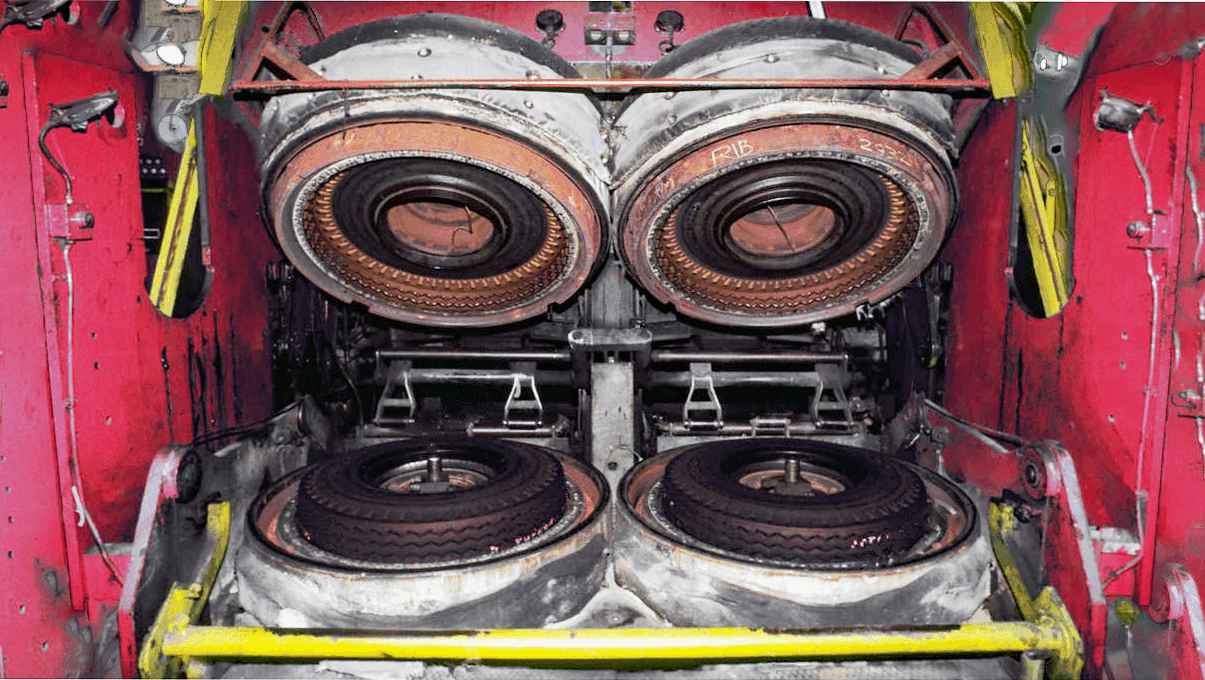
Иллюстрация, не Goodyear/LIST. Encik Tekateki: https://commons.wikimedia.org/wiki/File:Mesin_membuat_tayar_di_tayar_kilang.png . CC BY-SA 4.0: https://creativecommons.org/licenses/by-sa/4.0/ . Если кадрировано: производная CC BY-SA 4.0.
At a tyre factory, a change to one process can affect others: equipment, the flow of materials, lead times and quality control. Goodyear, in collaboration with the Luxembourg Institute of Science and Technology (LIST), has developed a prototype of the Goodyear Semantic Twin Accelerator (GSTA) system to compare possible decisions in a digital model before implementing them in production.
The system links data on materials, work stages, equipment, resources and production rules. On this basis, the virtual model simulates scenarios and shows how they might affect, for example, operation times, resource utilisation or the volume of work in progress. The results can be compared using the same metrics.
Here, AI helps specialists work with the model: it translates a question asked in everyday language into a proposed scenario for simulation and helps them make sense of the results. Those proposals are checked against the model’s rules, and conclusions must be based on the simulation data. The system does not make production decisions independently, nor does it control the machines.
According to Luxinnovation, the prototype has already demonstrated that production scenarios can be analysed repeatedly. Its implementation in the production of tyres for lorries and buses is ongoing. No reports have been made regarding the completion of its roll-out at any specific factory.
Project participants estimate that this approach could speed up digitalisation and AI implementation cycles by 30–40 per cent. This is a forecast for the development and testing of digital solutions, rather than a measured increase in tyre production. For Luxembourg’s industrial sector, the project is of interest in terms of how LIST’s research is applied to the specific challenges faced by a major manufacturer.