
Buergbrennen: how Luxembourg welcomes spring with fire
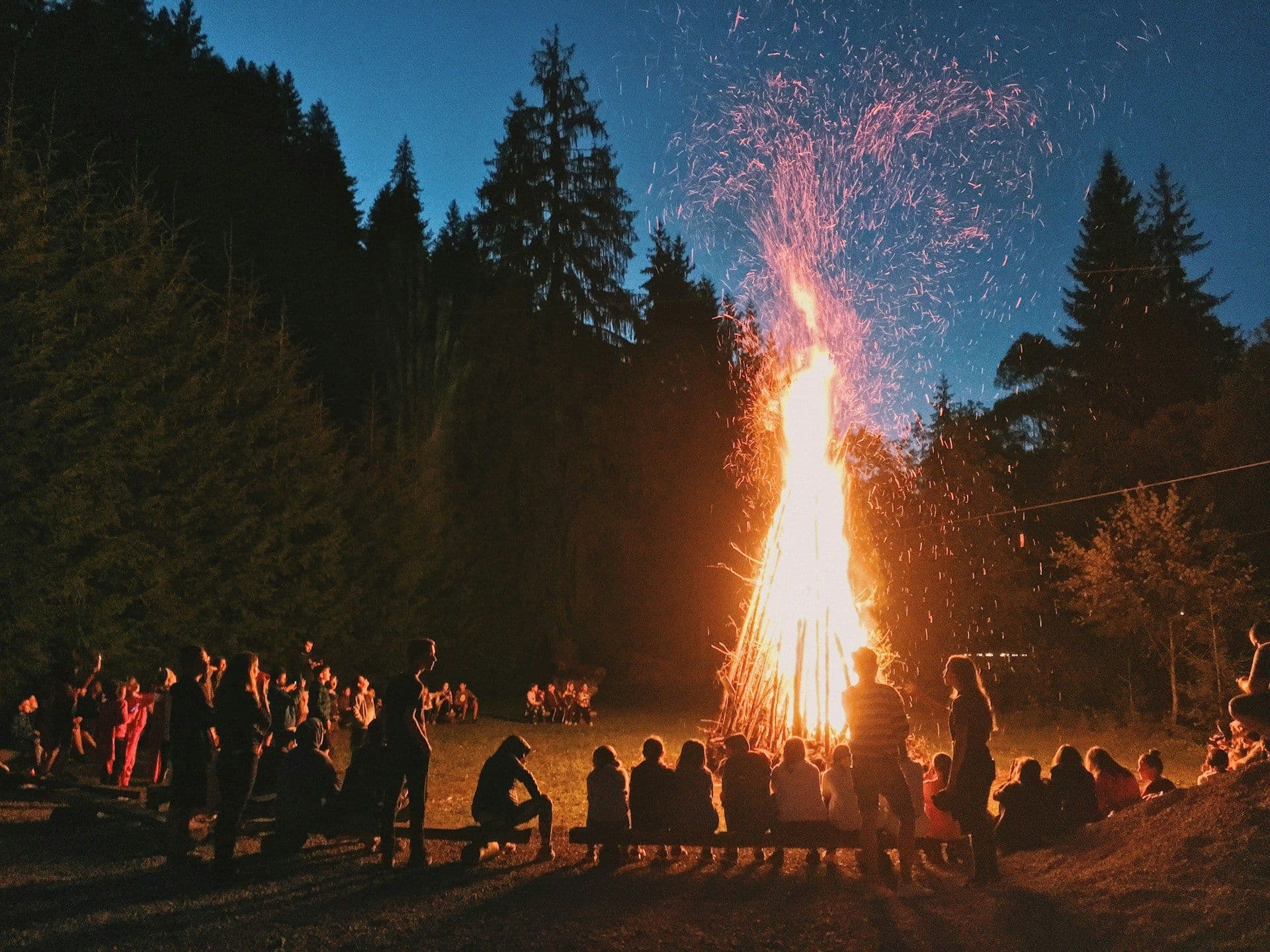
Georgiana Pop (Avram), Unsplash
On the first Sunday after Carnival, Luxembourg hosts Buergbrennen — mass bonfires that symbolically "burn" winter. Almost every village organises its own celebration, sometimes even several. In 2026, there are 188 events listed, although the organisers emphasise that the list is not exhaustive and residents are advised to check the details with their local authorities.
Preparations begin several weeks in advance. Residents gather wood, straw, garden clippings and often old Christmas trees. All of this is stacked in an open space to form a large structure, usually topped with a cross or a stylised "fortress". In the evening, the bonfire is ceremoniously lit. In many settlements, this is preceded by a torchlight procession: participants walk through the streets and then use their torches to light the prepared pyramid. In some places, there is a custom of entrusting the lighting to a newly married couple or a well-known local figure, although this practice is gradually dying out.
Historically, Buergbrennen was held strictly on Sundays, but today some associations move the event to Saturday or even Friday for reasons of convenience and to attract more participants. Local associations, including scouts, play a significant role in preserving the tradition even in small communities.
The custom has pagan roots and originally marked the arrival of spring. Fire symbolises the victory of warmth over cold and the end of winter. In the past, farmers and winemakers observed the direction of the smoke, believing that it predicted the nature of the beginning of summer. At the same time, as researchers note, the word "Buerg" is not related to the concept of "fortress" but comes from the Latin burere, meaning "to burn."
Similar fire rituals exist outside Luxembourg. In the Schwaben-Alemannien region of Germany, they are called Funkenfeuer; in Zurich, during the Sechseläuten festival, a snowman figure called Böögg is burned; in France, there is a well-known tradition called fête des brandons. Nevertheless, in Luxembourg, Buergbrennen remains one of the most recognisable collective rituals, combining pre-Christian elements with modern communal life.