Amazon hides overtime behind fake job titles

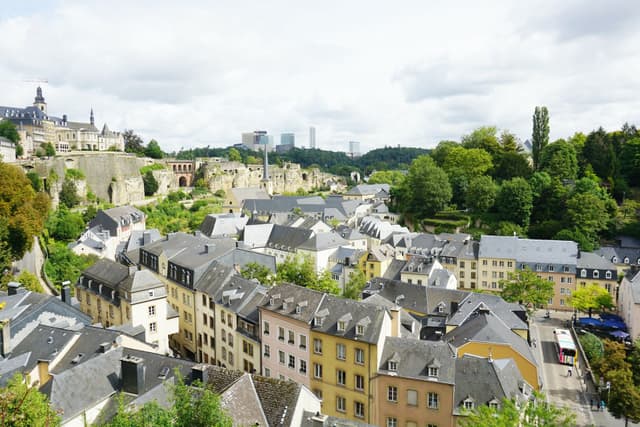
Christian Wiediger, Unsplash
The Labour and Mines Inspectorate (ITM) has received a second complaint alleging a breach of labour law by Amazon. The allegations suggest that the company has created a working environment in the Kirchberg area in which the country’s labour laws are effectively being ignored. This new complaint follows a complaint lodged in the summer, in which an anonymous employee reported that bonuses for working on Luxembourg’s National Day on 23 June had not been paid. The focus has now shifted to systematic breaches of working time regulations.
Although the contracts stipulate a standard working day from 8.30 am to 5.30 pm, staff are constantly expected to work beyond the stipulated hours. This results in the statutory limit of 40 working hours per week being regularly exceeded. The author of the complaint notes that, due to the time difference with the US, staff are forced to take part in late-night online meetings. Furthermore, predictable large-scale sales events, such as Prime Day and Black Friday, require staff to work late into the night, followed by an early return to the office. This practice deprives people of their legal right to rest and to disconnect from corporate systems, which inevitably leads to burnout.
According to the claimant’s estimates, over a period of 38 weeks he accrued 177 hours of overtime, equivalent to four and a half weeks of additional work. However, the premium for working on a public holiday was never paid. It also emerged that the corporation uses a specific internal staff classification system: more than half of the employees (54 per cent) are formally classified as ‘senior managers’. This status allows the company to avoid paying for overtime; however, in the complainant’s view, this classification does not meet Luxembourg’s legal criteria.
In response to the allegations, Amazon refused to provide specific details regarding its compensation schemes, the number of staff who worked on public holidays, or the legality of the mass appointment of senior managers. Instead, the company limited itself to stating that, in 2025 and 2026, it had been recognised as Luxembourg’s best employer by an independent certification body. Company representatives claim that employees who came to work on 23 June of their own accord received all the payments due to them. The Labour Inspectorate is currently continuing its investigation to establish the facts of the case.