The EU wants to turn into a single continental power
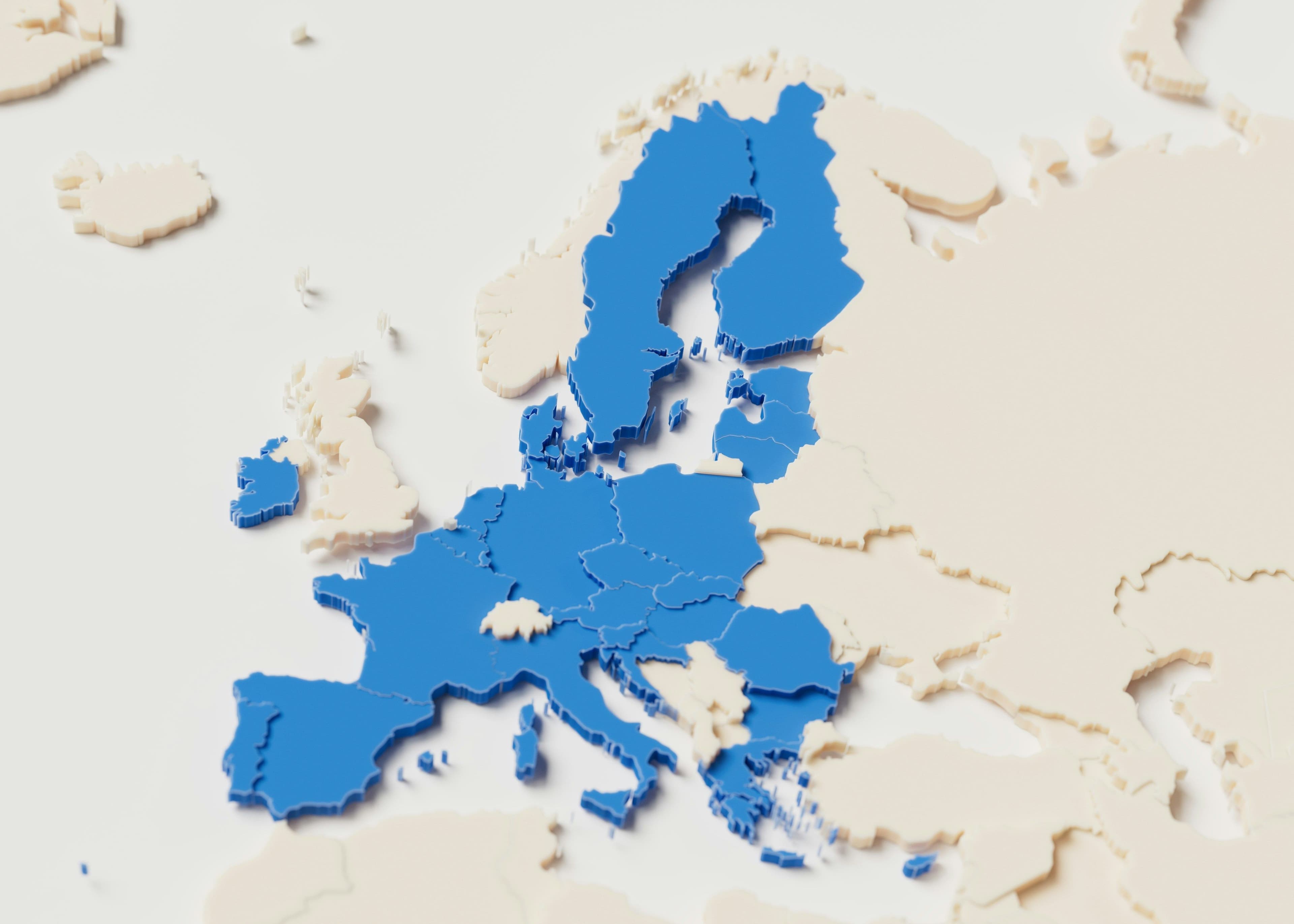
Planet Volumes, Unsplash
JEF Luxembourg and JEF Finland issued a joint statement calling for systemic reforms of the European Union and a genuine transition to deeper integration. The reason for this was the alarming dynamics of the implementation of strategic recommendations: as of January 2026, only 15.1% of the proposals from Mario Draghi's report on competitiveness had been implemented, 23.8% had been partially implemented, and 61.1% remained unimplemented. Moreover, the most sensitive measures concerning deeper integration have not been addressed at all.
A similar situation can be observed with Enrico Letta's report "Much more than a market", dedicated to the modernisation of the EU single market: no significant progress has been made in its implementation either. The authors of the statement emphasise that the problem is not a lack of analysis — there are enough reports — but a lack of political decisions, clear deadlines and structural reforms.
The text explicitly refers to an unfavourable geopolitical environment: Europe finds itself between an "unreliable ally," a "dangerous enemy at its borders," and a "tough competitor." At the same time, the EU remains structurally incapable of acting on the necessary scale. Against this backdrop, participants at the meeting of European leaders at Alden Biesen Castle (Belgium) discussed strengthening the single market and reducing dependence on external players in strategic sectors.
JEF welcomes the European Commission's "One market for one Europe" initiative, but stresses that coordination is not enough; real harmonisation of legislation is needed. If all 27 Member States are not ready to move forward simultaneously, the enhanced cooperation mechanism should be used more actively, as was previously the case with the Schengen area and the introduction of the euro.
One of the central proposals is the creation of the so-called "28th regime" — pan-European corporate law. The idea of EU Inc. envisages the possibility for companies to operate under a single set of rules throughout the Union, which should reduce regulatory fragmentation and ensure legal predictability. In the context of global competition, scale is a decisive factor, and the fragmentation of national markets, according to the authors, hinders the growth of European companies.
The financial component of the reforms also occupies an important place in the report. The EU budget accounts for about 1% of the Union's total GDP, while the average level of public spending in OECD countries reaches 46.3%. The authors consider this amount insufficient to realise strategic ambitions and advocate for the creation of a permanent fiscal instrument at the EU level. The NextGenerationEU programme, which has demonstrated the possibility of collective borrowing and investment, should not remain an exception.
In addition, the authors emphasise the need to build a savings and investment union, complete the Energy Union, and remove internal barriers in the capital market. At the same time, the authors caution against substituting simplification of regulation with deregulation: competitiveness cannot be built on a "race to the bottom" in standards; the problem lies not in an excess of rules as such, but in their 27 national versions.
The concluding part of the statement is institutional in nature. According to JEF Luxembourg and JEF Finland, the existing decision-making system based on the principle of unanimity is not fit for purpose in the current climate. They call for a path to be opened towards changing the founding treaties and strengthening supranational governance so that the EU can act as a continental power.