How strong security measures protect financial apps and accounts
In an increasingly digital world, money transfers, card payments, and account access are often just a tap away. That is exactly why the security of financial apps and online accounts is so important. But how do strong security measures protect our data and money from online attacks? It involves a combination of modern technology, clear legal regulations, and user awareness. Online banking and mobile payments are convenient, but attacks in these areas are now an everyday occurrence. Banks are particularly attractive to criminals because they manage a lot of personal and financial data. The good news: protective measures are constantly being developed, just like the attacks.
Digital financial security is a team effort. Banks and payment providers invest heavily in secure systems, and legislators set the rules. Nevertheless, users also play a major role in keeping an account well-protected. This primarily includes using strong, unique passwords. Since it is hard to remember many login details, a good password manager helps manage passwords and maintain high security without making daily life inconvenient. Even though many people worry, experts repeatedly show: modern digital payment systems can be very secure, often even more so than older methods—provided the right protective measures are in place.
What does security mean for financial apps and accounts?
Security in financial apps and accounts means that financial and personal data should remain confidential, unaltered, and available at all times. The goal is to prevent unauthorized access, fraud, manipulation, or data loss. This includes technical protective features in apps and banking systems, as well as operational procedures and user behavior. Attackers constantly look for vulnerabilities, and security experts try to close them quickly and prevent attacks early on.
A major task is balancing high security with ease of use. Hardly anyone wants to use a system that is extremely secure but so complicated that they constantly fail to use it. That is why many security features work in the background and only require confirmation for critical steps. Good providers also clearly explain which security measures are being used.
What are the risks for users of financial apps?
Internet attacks are diverse and constantly changing. There are several typical risks for users of financial apps and online banking:
- Phishing: Scammers send fake emails, SMS, or messenger texts. Links often lead to websites that look very similar to real bank pages, aiming to steal login data or TANs. They frequently create a sense of time pressure.
- Pharming: Here, the technical redirection is manipulated rather than the message being faked. Users land on a fake site despite entering the correct address, without immediately noticing.
- Banking Trojans: Malware on a PC or smartphone can read keystrokes, take over banking sessions, or trigger transfers in the background.
- Telephone Fraud (Social Engineering): Perpetrators pose as bank employees using spoofed numbers. They persuade victims to confirm TANs or execute actions in the app that are actually fraudulent.
- SIM Swapping: Criminals take over a phone number to intercept SMS TANs.
- Unsecured Wi-Fi: Open networks can be spied on.
- Vulnerabilities in apps or OS: Unpatched security flaws are a common entry point.
Ultimately, almost all attacks have the same goal: to trigger a payment that the user never authorized.
How do threats differ across apps, online banking, and mobile payments?
Many risks overlap, but there are differences depending on the area:
Classic browser-based online banking
Smartphone financial apps
Mobile payment systems (e.g., Apple Pay, Google Pay)
What are the legal requirements and guidelines for financial app security?
Security in the financial sector depends not only on technology but also on laws and rules that banks and payment service providers must follow. Because cyberattacks are increasing and financial data is highly sensitive, requirements have become stricter in recent years. These regulations aim to protect consumers and define how banks must secure their systems and react to security incidents.
For banks, this is also about trust. Violating rules risks trouble with regulatory authorities and greater liability for damages.
The role of PSD2 and Strong Customer Authentication
An important rule in European payment transactions is the Second Payment Services Directive PSD2 (Directive (EU) 2015/2366). In Germany, it was implemented primarily in the BGB [German Civil Code] and in the Payment Services Supervision Act (ZAG). A central point is the obligation for Strong Customer Authentication (SCA).
According to Section 55 ZAG, banks must often require strong authentication, for example when accessing an account or when initiating electronic payments. In doing so, at least two independent factors must be used:
| Category | What does that mean? | Examples |
| Knowledge | Something only the user knows | Password, PIN |
| Possession | Something only the user has | Smartphone, TAN generator |
| Inherence | Something the user is | Fingerprint, Face ID |
For customers, this is also legally important: In the event of an unauthorized payment, the bank must normally refund the amount quickly according to Section 675u BGB. In a dispute, the bank must show according to Section 676 BGB that everything ran correctly and no malfunction occurred. The BGH [Federal Court of Justice] has made it clear: It is not enough to simply say "PIN and TAN were used correctly". The bank must explain that the security system corresponds to the current state of the art and worked correctly in the specific case.
Only if the bank can prove that the customer acted intentionally or with gross negligence can the customer themselves be held liable according to Section 675v Paragraph 3 BGB. An example is the BGH ruling of July 22, 2025 (XI ZR 107/24): There, gross negligence was assumed because a user repeatedly passed on TANs over the phone, even though she could see the recipient IBAN and high amounts on the TAN generator that did not match the alleged 'security check'. And if a bank, contrary to its obligation, does not require strong authentication, the payer is normally not liable according to Section 675v Paragraph 4 BGB.
BaFin regulations and European data protection laws
In addition to PSD2, regulatory rules play a major role. In Germany, BaFin is the central authority and issues circulars and guidelines that concretize IT security at banks. Banks must have security concepts, emergency plans, and clear processes for incidents.
They must also implement technical and organizational measures to protect security features such as PINs, TANs, and app accesses. BaFin is increasingly emphasizing risks related to ICT and also the secure use of AI in the financial sector. International approaches such as the G7 paper on coordinated crisis response for cyber incidents in the financial sector also show: Banks should handle incidents professionally and continuously improve their systems.
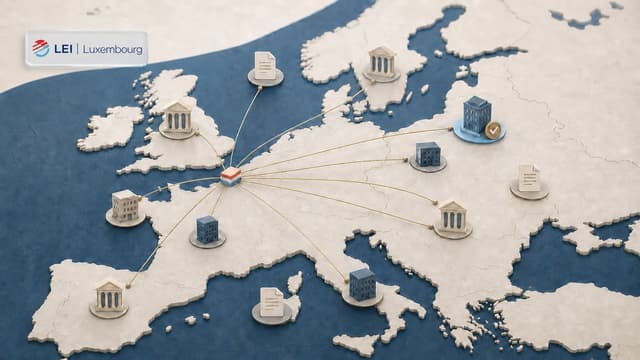
Added to this is the GDPR, which regulates the protection of personal data, thus also financial data. For credit card data, the PCI DSS is also widespread, which obliges companies to protect card data according to strict rules. These rules form the basis for many technical security measures. This becomes noticeable for customers at the latest when contacting the bank itself: Anyone who wants to open a business account in Luxembourg, for example, experiences firsthand how strictly institutes proceed with identity verification and the structure of submitted documents.
Which strong security measures protect financial apps and accounts?
Security for financial apps is not a "set up once and done" thing. Attacks change, so protective measures must be adjusted regularly. Banks rely on multiple layers of protection: secure login, encryption, protection against malware, and regular updates. The goal is to make access as difficult as possible for attackers.
It is also important: Protection is not just a matter for the bank servers. End devices of the users and the connection between the app and the bank must also be secured.
Two-Factor Authentication (2FA) and Strong Customer Authentication
2FA or SCA is one of the most effective measures in payment transactions. Users must confirm themselves with at least two independent characteristics in order to log in or authorize payments.
The advantage: Even if a password is stolen, attackers usually lack the second factor. Modern systems often use a banking app or TAN app together with biometrics or an extra PIN. This is secure and yet mostly user-friendly.
Encryption of sensitive data in apps and on servers
Encryption protects data during transmission and during storage.
- During transmission: TLS is usually used (recognizable by "https" and the lock in the browser). This prevents others in the network from simply reading or changing data. The PSD Bank Hannover eG explicitly mentions TLS as protection for customer data.
- During storage: Some apps like Outbank store data encrypted and anonymized directly on the device and not on external servers. This reduces the risk of central servers becoming a large target.
Banks also use DLP solutions. These scan for sensitive data, track their paths in the network, and can stop risky transmissions. This also helps with GDPR compliance.
Secure TAN procedure and mobile TAN
TANs have been important for authorizing transfers for years. Insecure old methods like iTAN lists are no longer used because they were easily vulnerable via phishing.
Today, app-based procedures (mobile TAN / pushTAN) are widespread. The TAN is generated or displayed in an extra app that is protected. An example is SecureGo plus, which is offered by PSD Bank Hannover eG, among others, and is TÜV-certified. Important points here:
- a new TAN for each transaction
- only valid for a short time
- only applies to exactly this action
- order data is displayed (IBAN, amount, purpose) so users can check what they are authorizing
Thus, an intercepted TAN can hardly be used for anything else.
App-specific protection mechanisms such as anti-phishing and malware protection
In addition to login and encryption, there are further protective functions:
- Anti-phishing: Browsers and security solutions can detect and block fraudulent sites. This protection should be active.
- Protection against malware: Security apps can help detect malicious programs. ESET experts consider it negligent to use mobile payment without a security app. At the same time, there is also criticism because apps on smartphones often run in separate areas and security apps cannot see everything.
Regardless of this, the following applies: Only use banking and payment apps that really come from the provider, and only install them from official app stores. The safest way is to go to the app store via the official bank website.
Regular security updates and patch management
Updates are one of the most important measures, but are often ignored. Software has bugs, and attackers specifically look for known vulnerabilities. Manufacturers close these with updates.
Therefore, operating systems and apps (especially financial apps) should always be up to date. If possible, enable automatic updates. Anyone who postpones updates for a long time leaves security gaps open. Banks themselves also maintain strict patch management for their servers and networks.
How do users benefit from strong security measures?
Strong security measures are not an end in themselves. They protect users, money, and data. This brings clear benefits for everyday life and trust.
Prevention of phishing, data theft, and malware
Strong customer authentication makes it very difficult to execute payments with stolen login data. Secure TAN procedures link each payment to a unique TAN that is only valid for a short time. This makes typical fraud attempts significantly less successful.
Anti-phishing features and malware protection also lower the risk of falling for fake sites or installing malicious software. Updates close known vulnerabilities before they are exploited. This lowers the risk of losing money and provides more security in banking transactions.
Protection of financial and personal data
Encryption like TLS protects the connection between the app and the bank. Thus, third parties cannot simply read transactions and personal data. If data is stored encrypted on the device, it remains more under the control of the user and is not stored centrally with third parties.
GDPR rules oblige banks to handle data carefully, not only against external attacks but also against internal misuse or errors. DLP systems help ensure that sensitive data does not leak outwards unnoticed. This strengthens privacy and trust.
What recommendations increase security when using financial apps?
Banks and rules create the foundation, but user behavior often plays a decisive role. Even good systems can be undermined by carelessness. These steps help in everyday life:
Regular password maintenance and the use of strong passwords
Strong passwords are the basis. According to the BSI, a password should have at least eight characters and mix upper/lowercase letters, numbers, and special characters. It should not contain personal info. A practical trick: Memorize a sentence and build a password from it, e.g., "Am liebsten esse ich Pasta mit vier Zutaten und extra Käse!" → "AleiPm4Z+eK!".
Important: Never use the same password for multiple services. If another account is hacked, bank accesses are otherwise also at risk. Because many strong passwords are hard to manage, a password manager helps to create and store secure passwords. Then you only have to remember one master password. Changing important passwords regularly is also useful to stay secure in the long term.
Avoiding public Wi-Fi for banking transactions
Open Wi-Fi networks in cafes, airports, or hotels are practical, but often easy to spy on. Attackers can intercept or manipulate data traffic.
Therefore: It is better to handle banking transactions only over secure connections, for example at home in a protected Wi-Fi or via mobile data. If you absolutely have to access your account while on the go, the mobile network connection is usually more secure than an open hotspot.
Activating device and app protection functions
Your own device is the access to financial data and should be well secured:
- use security software and keep it updated (depending on the device)
- regularly update operating system and apps
- activate phishing protection in the browser
- check before login: enter address yourself, pay attention to "https" and lock symbol
- remain suspicious of unusual calls, time pressure, warning windows, or requests to name several TANs
With a TAN generator or app, always check exactly what is displayed: Recipient IBAN, amount, and purpose must match exactly. If something seems odd: cancel and contact the bank via official channels.
Common questions and misconceptions about the security of financial apps
Despite new technology and strict rules, there are many misunderstandings, especially regarding mobile payment and biometrics. Clear info helps to avoid unnecessary fear and better identify real risks.
How secure are mobile payment systems really?
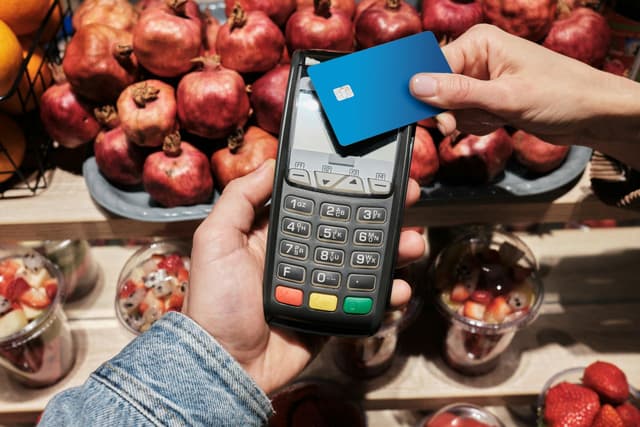
Many wonder if Apple Pay, Google Pay, or Wero are secure. An ESET survey from 2019 showed that at the time, 65% considered mobile payment systems insecure, older people even more often than younger ones. Even in 2026, mobile payment is increasingly offered in German-speaking countries, but is not yet used frequently everywhere.
Nevertheless, experts like Thomas Uhlemann (ESET) say that these systems can sometimes be more secure than classic methods. The main reason is tokenization: When paying, the real card data is not transmitted, but tokens that only confirm this payment. Even if data were intercepted, it would not be usable card data. In addition, security is increased because Apple Pay normally does not require a PIN that could be spied on.
One problem remains, however: Many people know too little about how tokenization works. This leads to false assumptions, such as card data being read or receipt contents being stored. More education is needed. And it is also clear: The more widespread mobile payment becomes, the more interesting it becomes for attackers. That is why users should protect their smartphones well and not install apps from unofficial sources.
Are biometric methods like Face ID or fingerprint secure enough?
Face ID and fingerprint are often used to unlock the smartphone and for confirmation in financial apps. In strong customer authentication, they belong to the "Inherence" category. Many see them as very secure.
Biometric characteristics are individual and hard to forge. Modern sensors can mostly distinguish real characteristics from simple copies. In addition, biometric data is often encrypted and stored locally in a protected area of the device (e.g., Secure Enclave), so other apps cannot read it.
Nevertheless, there is no absolute security. Very elaborate tricks can work in rare cases. In addition, much depends on how well the device as a whole is protected. If a smartphone is lost and the screen lock is cracked, that can be a risk, even if the banking app still requires a PIN or a password. Overall, however, biometric functions are a secure and convenient addition that makes attacks significantly more difficult.
Future developments and challenges for the security of financial apps
Digital financial services are constantly evolving. With new technology come new types of attacks, but also better defense options. The security of financial apps is shaped by new fraud schemes, technological advances, and new rules.
Current cybercrime trends and typical forms of attack
The number of attacks on banks continues to rise, as Frank Sauber (Secunet) emphasized in February 2024. Perpetrators are becoming more skillful and adapt quickly. Phishing, pharming, and trojans remain important, but new mobile payment providers will also increasingly become targets over time. As more people use mobile payments, attackers will align their methods accordingly.
Telephone fraud and other social engineering attacks remain particularly dangerous because they exploit human weaknesses. Added to this are zero-day vulnerabilities, i.e., weak points that are not yet known and for which there is no patch yet. Banks must therefore not only secure technology, but also improve rapid response, clean processes, and clear communication with customers. The G7 policy paper on coordinated crisis response shows how important good emergency and communication plans are.
Technological advances in security and AI
New technology helps not only attackers, but also defense. AI is becoming increasingly important in banking, including in mobile applications. It can simplify processes and help detect fraud faster.
In the security sector, AI can detect conspicuous patterns in logins or payments in real time. Machine learning models find unusual deviations that indicate fraud. AI can also help analyze malware or detect phishing. Outbank, for example, is working on AI to categorize transactions partially at first, then fully automatically later. This makes usage easier and can make irregularities visible more quickly.
Nevertheless, AI in the financial sector must be used responsibly. Data protection and fairness play a major role. Providers should openly explain how their systems work and what data is used. FinTechs will be asked more about security knowledge in addition to technology, so that users can build trust. Progress in the financial sector works best when FinTechs, banks, and rules fit together and make new solutions secure and understandable.
Conclusion
Security for financial apps and accounts goes far beyond passwords. It is a continuous race between new fraud attempts and new protective functions. In 2026, requirements will continue to rise, especially due to rules like PSD2 and data protection regulations like the GDPR.
However, security is not just technology. It is a joint project of banks, supervision, and users. Those who know risks, use safe habits, and remain attentive to new fraud schemes protect themselves best. In the future, AI and better detection systems will make many things easier and also safer, for example through faster fraud detection or convenient biometric approvals. Nevertheless, humans remain a crucial part of the security chain. Those who act informed and attentively actively help to ensure that financial data and money remain protected in the future.