What is an LEI code and when do Luxembourg companies need one?
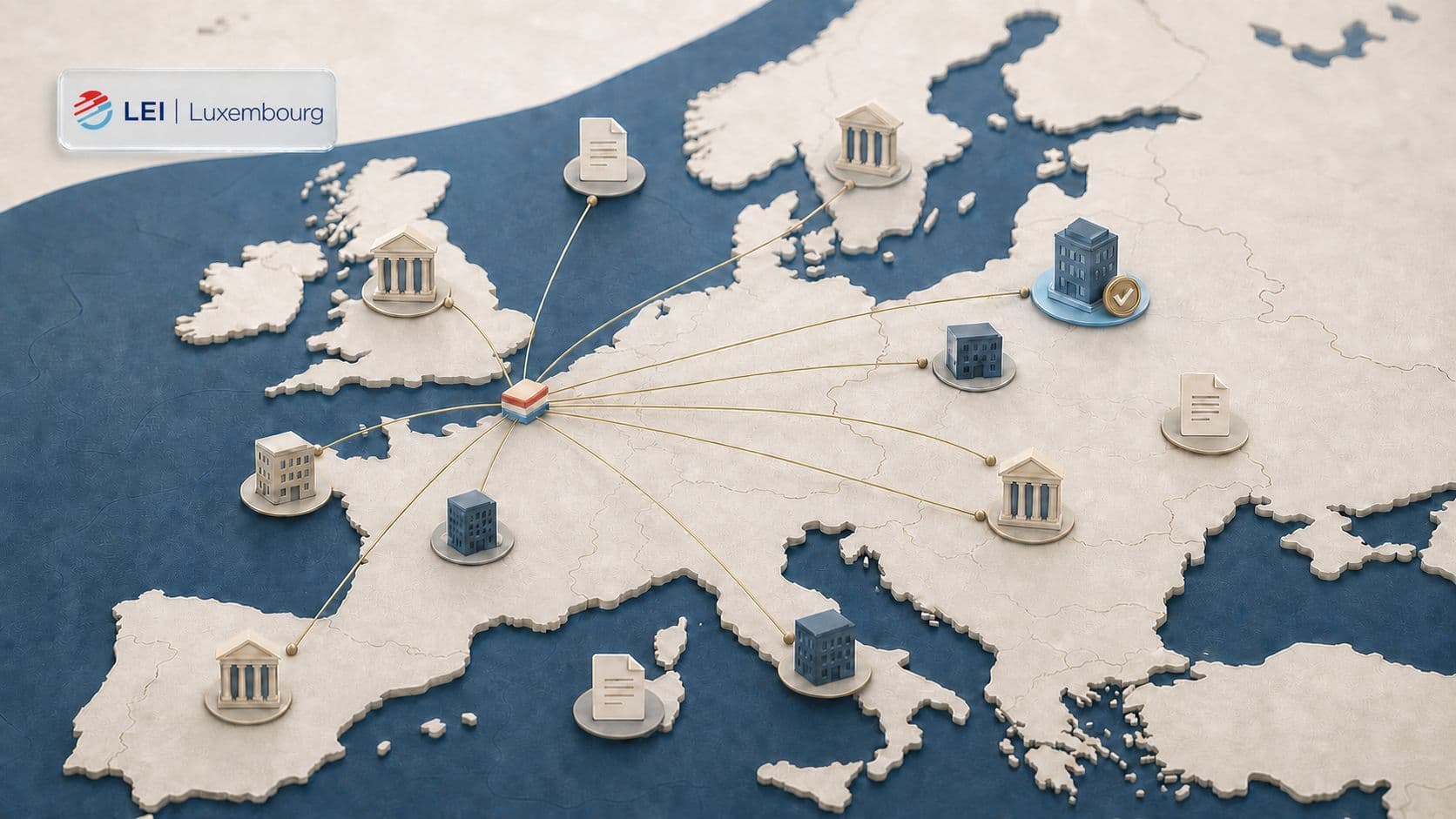
While banks, brokers and regulated counterparties rely on standardised legal entity data, LEI Luxembourg explains why companies in the Grand Duchy may face LEI requirements when trading securities, reporting on funds, meeting regulatory reporting obligations and carrying out cross-border transactions.
For many Luxembourg business leaders, the first encounter with an LEI code comes at the worst possible moment. A broker cannot execute a reportable securities transaction, a bank or investment firm asks for additional legal entity identification, a derivatives transaction must be reported, or an international counterparty requires a verified legal entity identifier before client onboarding can continue. LEI Luxembourg is an official LEI registration agent for companies in Luxembourg and supports them with the application, renewal and management of their LEIs through the network of GLEIF-accredited LEI issuers; the LEI itself is always issued by an accredited issuer within the Global LEI System. But before getting into the how, it is useful to understand the what and the why.
What is an LEI code?
LEI stands for Legal Entity Identifier. It is a 20-character alphanumeric code that uniquely identifies a legal entity taking part in financial transactions. This can be a company, an investment fund, a foundation, an association, a non-profit organisation, a public sector entity or another eligible legal entity, depending on the legal and reporting context.
The system was created in the aftermath of the 2008 financial crisis, when supervisory authorities found it surprisingly difficult to know who stood on each side of a transaction. Large financial groups, including Lehman Brothers, operated through complex networks of legal entities spread across several jurisdictions, with no consistent identifier linking them together. LEI codes were designed to solve precisely this problem.
Today, LEI codes are based on the ISO 17442 standard and are managed within the Global LEI System, with the Global Legal Entity Identifier Foundation (GLEIF) responsible for its operational integrity. LEI records are publicly accessible through the Global LEI Index maintained by GLEIF, which makes the LEI an open, globally recognised standard for identifying legal entities.
Each LEI record contains two levels of information. Level 1 states who the entity is: its legal name, registered address, jurisdiction and registration authority data, where available. Level 2 provides information on relationships with direct and ultimate parent companies in the sense of accounting consolidation, where these apply and are reported. The LEI is not a register of beneficial owners and must not replace AML, KYB, sanctions or UBO checks.
Who needs an LEI code in Luxembourg?
Originally, LEI adoption was driven mainly by financial regulation and market reporting obligations. Since then, LEI codes have become relevant to a broader set of legal entities, because banks, brokers, investors, regulated counterparties and cross-border partners often rely on standardised identifiers. Whether a given company needs an LEI depends on its activities, its counterparties and its reporting obligations: an LEI may be required or requested to complete transactions, client onboarding or a regulatory report.
The most direct case is securities trading. If a Luxembourg company wants to carry out reportable transactions in shares, bonds, ETFs or other financial instruments through a broker or investment firm, including transactions in instruments admitted to trading on regulated markets such as the Luxembourg Stock Exchange (LuxSE), the institution will generally require the company's LEI before the transaction can be executed, because it needs it to meet its transaction reporting obligations under MiFIR.
Luxembourg's position as Europe's leading investment fund domicile makes the LEI particularly relevant to the funds sector. UCITS, alternative investment funds, their management companies and other regulated vehicles are commonly identified by LEIs in prudential and market reporting, and fund administrators, custodians and distributors frequently request this identifier as part of standard onboarding. Sub-funds may also require their own identifier, depending on the applicable reporting framework.
LEI codes are also used in other reporting frameworks. Under EMIR, counterparties to derivative contracts are identified by their LEI in reports submitted to trade repositories. Under SFTR, counterparties to securities financing transactions, including repurchase transactions, buy-sell back or sell-buy back transactions, securities lending and borrowing, and margin lending, use LEIs for reporting to registered or recognised trade repositories. In Luxembourg, the Commission de Surveillance du Secteur Financier (CSSF) supervises the financial sector, including banks, investment firms, fund managers and investment funds, alongside the Banque centrale du Luxembourg. These reporting frameworks rely on standardised identifiers, including LEIs, to help authorities identify the legal entities concerned.
LEI codes are also relevant in the context of central securities depositories. Under the Central Securities Depositories Regulation (CSDR), central securities depositories must require issuers to obtain and provide a valid LEI. LEIs are also used to identify the legal entities concerned in the registers of central securities depositories and in regulatory reports. As local context, LuxCSD serves as the national central securities depository, while Clearstream Banking S.A. in Luxembourg operates as an international central securities depository.
For financial entities subject to DORA, which has applied in the European Union since 17 January 2025, LEIs are also relevant to the registers of information on contractual arrangements with third-party ICT service providers. Financial entities must maintain these registers and record standardised identifiers for their providers in them. Providers established in the European Union that are legal persons are identified by means of an LEI or an EUID; for legal-person providers established outside the European Union, the accepted identifier is the LEI. Alternative identifiers, such as registration, VAT, passport or national identity numbers, apply only to natural persons acting in a professional capacity, not to legal-person providers. These identification rules apply specifically in the context of the DORA register of information; DORA does not create a general obligation for all financial entities to hold an LEI.
Based on LEI Luxembourg's experience, companies in the Grand Duchy most often encounter LEI requests in their practical dealings with banks, brokers, investment firms, fund administrators, trading platforms or international financial partners. Given how international the Luxembourg economy is, this need can arise when trading securities, entering into derivatives transactions, launching and reporting on funds, opening an investment account, arranging cross-border financing, or when a foreign counterparty needs a standardised identifier for its due diligence.
Not every Luxembourg company needs an LEI today. But the following companies are more likely to be asked for one.
You may need an LEI if your company:
- carries out reportable transactions in shares, bonds, ETFs or other financial instruments through a broker or investment firm, including instruments admitted to trading on regulated markets such as the Luxembourg Stock Exchange;
- is a UCITS, an alternative investment fund, a management company or another regulated vehicle supervised by the CSSF, or a sub-fund separately identified in prudential reporting;
- enters into derivative contracts reportable under EMIR;
- is a counterparty to repurchase transactions, buy-sell back or sell-buy back transactions, securities lending and borrowing, margin lending or other transactions reportable under SFTR;
- is an issuer or related participant of a central securities depository such as LuxCSD or Clearstream Banking S.A.;
- is a financial entity subject to DORA, or provides ICT services to financial-sector clients that may need to identify it in their DORA register of information by means of an LEI or, for legal persons established in the European Union, an EUID;
- is asked for an LEI by a bank, a financial intermediary, an investor, a supervisory authority or a foreign counterparty.
If your company sells goods or services locally and does not interact with financial markets, you most likely do not need an LEI for the time being. But because banks, brokers, investors and regulated counterparties often rely on verified entity data, having an LEI can sometimes reduce friction later on.
Why the LEI matters beyond compliance
It is easy to see the LEI as just another regulatory box to tick. But this view does not fully reflect its practical value.
An LEI gives your organisation a verified, globally recognised legal entity identifier. When a counterparty, investor or financial institution looks up your code in the GLEIF database, it can see your legal reference data as validated within the Global LEI System and, where applicable, information about your parent company. This kind of transparency can reduce friction during onboarding, facilitate due diligence and strengthen credibility with counterparties that rely on verified entity data.
For Luxembourg companies active internationally or working with regulated financial institutions, investors and international counterparties, the LEI offers a standard identifier understood beyond the borders of the Grand Duchy. This does not mean that an LEI replaces other checks: banks, brokers and compliance teams may still need corporate documents, beneficial ownership information, sanctions screening and tax data. But the LEI gives them a reliable starting point for identifying the legal entity.
How do you obtain an LEI code?
LEI codes are issued by GLEIF-accredited LEI issuers, also known as Local Operating Units (LOUs). Registration agents such as LEI Luxembourg help legal entities access the network of LEI issuers and manage the application process. GLEIF states that legal entities are not restricted to an issuer based in their own country, provided that the issuer is accredited for the jurisdiction concerned.
The process is straightforward: you submit your company's registration data, the LEI issuer verifies it against official sources, and the code can generally be issued once verification is complete, depending on the issuer, the verification requirements and how complete the application is. In Luxembourg, company data is commonly verified against official information from the Trade and Companies Register (RCS), maintained by Luxembourg Business Registers, as well as other official sources depending on the entity's legal form.
One important point to be aware of: an LEI must be renewed every year. If renewal is missed, the registration status becomes "Lapsed" in the GLEIF database. A lapsed LEI keeps the same identifier, but its reference data is pending revalidation. Some reporting, trading or onboarding processes may require the LEI record to be up to date. A registration agent can track renewal dates and warn its clients before their LEI expires.
LEI Luxembourg supports the application and renewal of LEI codes for companies in Luxembourg, with most codes issued in under 24 hours, although more complex corporate structures or requests for additional information may extend this timeframe. Luxembourg companies can apply for or renew an LEI code at lei-luxembourg.lu.